
Cutting the cord makes sense when the picture still holds up, and the right indoor or outdoor antenna can pull in dozens of local channels without a monthly bill. I’ve spent years sorting through the noise in this category, so I pulled together ten solid picks covering everything from discreet flat panels to roof-mounted workhorses. The goal is simple: help you find a setup that matches your home, your broadcast distance, and the channels you actually want to watch.
A Snapshot Of The Selections
Merpersom 2026 Digital TV Antenna 5000+ Mi Range

Susbrothe 6000+ Miles Range TV Antenna

Qboy 2026 TV Antenna Indoor 5000+ Miles
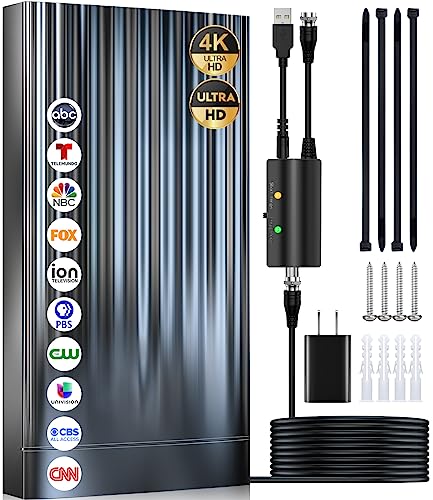
ophirs 6000+ Miles TV Antenna with 52FT Cable

Five Star Outdoor HDTV Antenna 200 Mile Range

Qellaff 2026 Smart TV Antenna Indoor
AXEVOI 2026 Upgraded Indoor TV Antenna

Qboy 2026 Upgraded TV Antenna with Booster
Five Star Outdoor HDTV Antenna ATSC 3.0 Ready
Five Star Amplified Outdoor Antenna 150 Mile Range
A Closer Look At Each Pick
The Merpersom antenna earns its place at the top by solving a problem many indoor units ignore: cable length. That 38-foot coax run means I can route the wire behind a bookshelf, around a door frame, or up to a second-floor window without buying extensions. For someone renting a basement apartment where the broadcast towers happen to sit on the wrong side of the building, that flexibility tends to matter more than raw amplifier specs.
Setup stays straightforward. The flat panel sticks to a wall or sits on a flat surface, and the Smart IC chip handles both VHF (very high frequency, the older broadcast band) and UHF (ultra high frequency, where most modern digital channels live) signals while filtering cellular and FM interference. Compared to the Susbrothe I’ll cover next, this one leans more on placement versatility than peak amplification.
A Favorable Mix
- 38-foot coax cable handles tricky room layouts without extras
- Smart IC chip filters out mobile and FM interference for cleaner reception
- Supports both VHF and UHF bands, catching more channels than single-band units
- Flat panel design mounts discreetly on walls or windows
- Works with most set-top boxes and smart TVs out of the box
Things To Consider
- Amplifier strength may fall short in areas more than 50 miles from broadcast towers
- Adhesive backing can lose grip on textured or dusty walls over time
Made For
City and suburban dwellers who need cable length more than brute-force amplification and want a clean, low-profile install.
Skip It When
Rural shoppers living far from broadcast towers should reach for the ophirs 6000+ Miles TV Antenna with 52FT Cable instead, since its extra-long run and amplifier combo handles weak-signal areas better.
The Susbrothe leans hard into the amplified end of the indoor category, which makes it appealing in apartments where signals have to fight through concrete or foil-backed insulation. The included amplifier pulls in weak stations that a passive flat panel might miss entirely, and the unit works both indoors and in sheltered outdoor spots like a covered patio.
It’s not the prettiest antenna on the shelf. The housing is functional rather than refined, and the cable length lands somewhere shorter than what the Merpersom offers. For someone in a ground-floor unit near downtown broadcast towers, though, that trade-off rarely matters.
Well-Handled Touches
- Strong built-in amplifier helps recover marginal signals through walls
- Dual indoor and outdoor mounting options for flexible placement
- Pulls mainstream local networks without a monthly subscription
- Simple coaxial connection works with older TVs and modern smart displays
Honest Caveats
- Amplifier requires a USB or outlet power source nearby
- Coax cable run is shorter than some competing indoor antennas
- Plastic housing feels lighter than competing options
Who Will Love This
Apartment renters in signal-challenging buildings who need amplification more than aesthetics.
Look Elsewhere When
Shoppers prioritizing a discreet look and longer cable reach will find the Merpersom 2026 Digital TV Antenna a more flexible everyday fit.
Qboy’s indoor panel lands in a useful middle ground, supporting ATSC 3.0 (the next-generation broadcast standard that delivers 4K HDR and improved audio over free signals) for shoppers who want to future-proof their setup without jumping to a roof-mounted unit. That’s a meaningful distinction for anyone using a newer 4K television who wants to make sure their antenna survives the broadcast transition.
The form factor stays slim and unobtrusive, and the amplifier handles typical suburban distances without fuss. It’s not the longest-range option in this list, but for the price band it competes in, the feature mix feels balanced.
Everyday Perks
- ATSC 3.0 support keeps the antenna relevant through upcoming broadcast upgrades
- Slim panel disappears behind most televisions or against a window
- Amplified reception covers most suburban broadcast distances cleanly
- Captures hundreds of free local channels including major network affiliates
Points To Note
- Signal strength drops sharply beyond 40 miles in rural areas
- Amplifier needs constant power to maintain peak performance
Built With In Mind
Suburban households with newer 4K TVs who want a budget-friendly path into ATSC 3.0 reception.
Where A Sibling Pick Shines
Shoppers chasing every last channel in fringe reception areas will get more from the ophirs 6000+ Miles TV Antenna with 52FT Cable.
The ophirs antenna takes a different approach than the others in the indoor cluster. The 52-foot coax cable is the longest in the roundup, and the bundled amplifier pushes reception further into fringe territory. For a large home, an office with multiple floors, or anyone routing cable around unusual architecture, that combination solves real problems.
It supports 8K, 4K, and 1080p signals, so resolution isn’t a concern. The trade-off shows up in size: this panel is bulkier than the Merpersom and the Qboy, and the amplifier adds a powered component to the install.
Real-World Strengths
- 52-foot coax cable reaches upper floors, attics, and distant rooms without extensions
- Built-in amplifier handles rural and suburban fringe reception
- Supports 8K, 4K, and 1080p broadcasts for high-end displays
- AC adapter included for stable powered performance
Where It May Fall Short
- Larger panel footprint than competing flat designs
- Amplifier requires nearby outlet access
- Excess cable length needs careful management to avoid signal loss in coiled slack
Whose Shelf It Belongs On
Large homes, multi-story offices, and rural households needing maximum cable reach and amplifier strength.
Consider Something Else When
Minimalists in studio apartments will find the Merpersom 2026 Digital TV Antenna easier to hide and route through tight spaces.
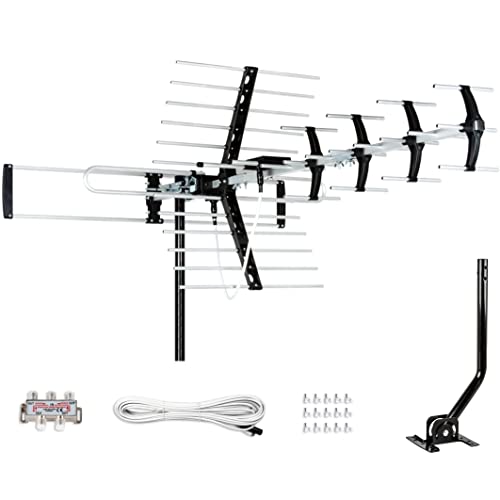
Five Star shifts the conversation from indoor convenience to genuine whole-home coverage. The 200-mile rated range, attic-or-roof mount design, and support for four TVs make this the antenna I’d point a cord-cutting family toward once they’re past the apartment stage. The included J-mount and installation kit removes one of the usual friction points of going outdoor.
Both VHF and UHF reception come standard, and the unit pulls in 4K and 1080p broadcasts without a separate amplifier. Mounting does mean climbing, drilling, and weatherproofing cable entries, which is more commitment than hanging a flat panel.
Where It Delivers
- Supports up to four TVs from a single outdoor antenna
- 200-mile rated range handles rural and suburban broadcast distances
- VHF and UHF coverage captures the full broadcast spectrum
- Includes J-mount and installation hardware out of the box
- Handles 4K and 1080p signals without an external amplifier
Practical Considerations
- Roof or attic installation requires drilling and weatherproofing
- Larger physical footprint than any indoor option in this roundup
- Directional aiming may need adjustment to hit different broadcast clusters
Best Suited To
Suburban homeowners with multiple TVs and the willingness to handle a roof or attic install.
Not Your Match When
Renters who can’t drill into exterior surfaces should stay with the Qellaff 2026 Smart TV Antenna Indoor instead.
The Qellaff antenna targets a specific scenario: a 4K HDR television that needs an antenna capable of passing through high-bandwidth signals without compression artifacts. The 720p, 1080i, 1080p, 2K, and 4K HDR format support covers the modern display range cleanly.
The flat panel stays slim and the install runs about five minutes from box to channel scan. Compared to the Qboy I covered earlier, this one reads as a similar feature set in a slightly more refined package, though the amplifier specs don’t push beyond typical indoor use.
Where It Helps
- Full 4K HDR signal pass-through for premium televisions
- Quick install with no specialized tools required
- Unlocks free local channels including network and shopping networks
- Low-profile panel fits behind most televisions
Trade Offs
- Coax length is shorter than several competing indoor antennas
- Performs best within 35 miles of broadcast towers
Right Fit For
Owners of recent 4K HDR televisions living in signal-strong urban or near-suburban areas.
Reach For A Different Pick When
Shoppers farther from broadcast towers will benefit more from the Qboy 2026 Upgraded TV Antenna with Booster’s stronger amplification.
AXEVOI’s antenna hits the entry-level price tier without gutting the feature set. The amplifier pulls in mainstream local networks reliably, and the included cable reaches most living room setups without extension purchases.
The build is light, and the housing won’t win design awards, but the practical question is whether it pulls in the channels that matter. For most renters in broadcast-rich zip codes, the answer tends to be yes.
The Practical Payoff
- Entry-level pricing without sacrificing amplifier quality
- Covers mainstream networks including ABC, CBS, NBC, PBS, and FOX
- Lightweight design mounts with basic adhesive or sits on a shelf
Room For Improvement
- Plastic construction feels thin compared to premium indoor units
- Performance drops noticeably past 30 miles from broadcast towers
- Limited weather resistance if used in sheltered outdoor spots
Who Should Grab It
First-time cord cutters in well-served broadcast areas who want the cheapest viable option.
A Better Fit Elsewhere
Buyers wanting stronger signal capture at a similar tier should consider the Qellaff 2026 Smart TV Antenna Indoor for its 4K HDR support.
Qboy’s second entry in this roundup goes after shoppers who own premium displays and want every resolution option covered. The 8K HDR pass-through is more future-proofing than current necessity, but it’s a smart hedge given how quickly ATSC 3.0 broadcasts are expanding.
The signal booster pushes reception further than the cheaper Qboy unit I covered earlier, and the channel coverage spans national networks plus secondary channels like MeTV and CW. Setup mirrors the standard flat-panel routine.
The Good Stuff
- 8K HDR signal support covers the highest-resolution displays on the market
- ATSC 3.0 standard ready for the broadcast transition
- Built-in booster strengthens reception in marginal signal areas
- Captures extended channel lineups beyond major networks
Less Ideal Details
- Booster adds a powered component to the install
- Premium feature mix commands a higher price than basic indoor units
The Right Fit
Owners of 8K-capable displays who want their antenna to outlive the current broadcast cycle.
Swap It Out When
Buyers on standard 4K TVs in strong signal areas will do just as well with the Qellaff 2026 Smart TV Antenna Indoor at a friendlier price.
This Five Star unit covers the same outdoor territory as the other 200-mile model in this roundup, but adds ATSC 3.0 compatibility for shoppers planning around the broadcast transition. The J-mount and installation kit keep the hardware side of the project manageable.
Four-TV support makes it a strong choice for split-level homes where multiple televisions need signal from one rooftop source. The directional design means a little more aiming patience during setup, but the long-term payoff is solid reception.
Everyday Advantages
- ATSC 3.0 future-proofing for next-generation broadcasts
- Drives up to four TVs from a single outdoor mount
- 200-mile range handles suburban and rural installations
- VHF and UHF reception covers the full broadcast spectrum
Some Limits To Know
- Directional design needs careful aiming toward broadcast towers
- Roof install requires weatherproofing cable entry points
Perfect Match For
Homeowners investing in a long-term rooftop setup who want to ride out the ATSC transition without swapping antennas.
Where Another Pick Suits Better
Apartment dwellers without roof access will do better with the Susbrothe 6000+ Miles Range TV Antenna’s indoor flexibility.
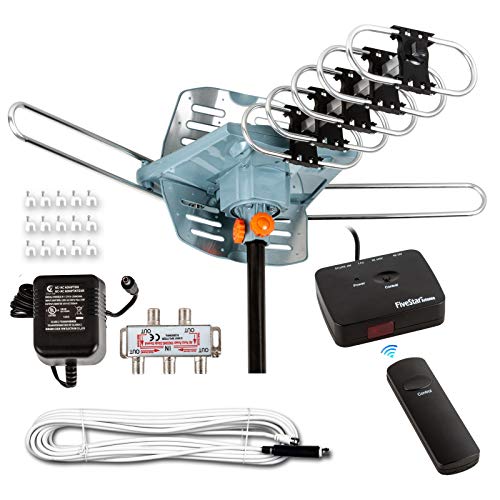
The motorized version rounds out the roundup with a feature the other outdoor units don’t offer: 360-degree rotation controlled by a wireless remote. That’s a real advantage when broadcast towers sit in different directions, or when signal conditions shift with weather. Aiming becomes a couch exercise instead of a ladder trip.
The 150-mile range falls slightly short of the other Five Star models, but the 40-foot RG6 coax and five-TV support handle most whole-home installations cleanly. The package includes a 4-way splitter, which removes another piece from the shopping list.
A Few Highlights
- Wireless remote rotates the antenna 360° without climbing
- Supports up to five TVs from a single install
- 40-foot RG6 coax cable included for flexible routing
- 4-way splitter bundled to drive multiple televisions
- Built-in low-noise amplifier cleans up marginal signals
Factors To Consider
- Rotating motor adds mechanical complexity versus fixed-direction antennas
- 150-mile rated range falls below other Five Star outdoor units
- Mounting pole sold separately from the antenna package
- Remote requires AAA batteries that are not included
Who It Suits Best
Homeowners with towers in scattered directions who want remote aiming convenience across multiple TVs.
Another Choice May Suit
Buyers who don’t need motorized rotation can save with the Five Star Outdoor HDTV Antenna 200 Mile Range and its fixed-direction simplicity.
Choosing The Right Antenna For Your Home
The first decision is indoor versus outdoor. Indoor antennas handle well-served urban and suburban areas without drilling or weatherproofing, but they struggle once broadcast towers push past 40 miles. Outdoor units take more effort to install but reach further and serve multiple TVs from one mount.
Cable length matters more than most shoppers expect. A long coax run lets you place the antenna where signal enters the home cleanly, whether that’s a second-floor window or a rooftop edge. Look for at least 25 feet for indoor use, 40 feet or more for outdoor installs.
ATSC 3.0 support is worth seeking out. The standard (Advanced Television Systems Committee, the body governing broadcast formats in North America) delivers 4K HDR and improved audio over free signals, and adoption is accelerating. Buying compatible hardware now avoids a future swap.
Multi-TV support comes into play when a household runs more than one television off the same antenna. Units with built-in splitters or higher-output designs save the cost of external distribution hardware.
Range Versus Reality
Range ratings in this category often exceed realistic performance. Manufacturers list maximum theoretical reach under ideal conditions, but real-world reception depends on terrain, building materials, and tower proximity. A 200-mile antenna at 30 miles with obstacles can underperform a 50-mile antenna in open sight line. Shopping by range alone tends to mislead.
What To Watch Before You Buy
Pitfalls Shoppers Hit
The most common mistake is buying the longest-range antenna without checking actual broadcast tower locations. Resources like the FCC’s DTV reception maps show exactly which signals reach a given address and from which direction. Buying a 200-mile directional antenna when all local towers sit within 20 miles wastes money and aiming effort.
Indoor antennas often get blamed for signal issues when placement is the real problem. Sticking a flat panel behind a television, near a router, or on an interior wall blocks signal. A window with line-of-sight to local towers almost always outperforms a hidden shelf location, regardless of amplifier specs.
Where The Extra Money Goes
Higher-tier antennas earn their premium through stronger amplification, longer cable runs, multi-TV distribution, and outdoor-rated construction. For households in signal-rich areas, the basic tier delivers the same channel lineup at lower cost. The upgrade pays off when fringe reception, whole-home distribution, or ATSC 3.0 future-proofing enters the picture.
Frequently Asked Questions
How far should my antenna be from broadcast towers?
Most indoor antennas work reliably within 35 miles of broadcast towers when placed near a window. Outdoor units extend that range to 60 miles or more, with high-gain designs reaching further in open terrain.
Do amplified antennas really help?
Amplifiers boost weak signals, but they also amplify noise. They help when signal is present but marginal, and they underperform when signal is genuinely absent. Placement still matters more than amplification strength.
Will an antenna work with any TV?
Modern televisions include built-in ATSC tuners, so any antenna with a standard coaxial connection works. Older analog TVs need a converter box, which most households have already upgraded past.
Can one antenna serve multiple TVs?
Outdoor antennas with multi-TV output support and indoor antennas paired with a splitter can serve several televisions. Signal loss across the splitter may require an amplified distribution unit for clean results on every screen.
What is ATSC 3.0 and do I need it?
ATSC 3.0 is the next-generation broadcast standard supporting 4K HDR and enhanced audio. It’s not required for current free TV, but new TVs increasingly include tuners for it, and adoption continues to expand across markets.
The Takeaway
The right antenna depends on your broadcast distance, household size, and tolerance for installation effort. Apartment dwellers get plenty from compact indoor panels, while homeowners benefit from rooftop options that serve every television at once. Match the antenna to your real signal environment, and the free channels arrive without a monthly bill attached.