
Picking a screen tablet for art shouldn’t feel like guesswork. I’ve watched creators wrestle with styluses that skip, displays that wash out under lamp light, and screens so tiny that fine linework becomes a chore. The right pen display turns those frustrations into flow, and the wrong one makes every session feel like a fight. This roundup walks through the options I’ve researched for 2026, from compact travel screens to large standalone tablets, so you can match a tool to how you actually work.
The Choices Worth Comparing
WooKoudai Digital Drawing Glove 2 Pack

HUION Kamvas 13 (Gen 3) Drawing Tablet

HUION Kamvas Pro 16 V2 Drawing Tablet

HUION KAMVAS Pro 19 4K UHD Drawing Tablet

XPPen Artist 24 Pro 2.5K QHD

Frunsi RubensTab T14 Standalone Drawing Tablet
Wacom Cintiq 16 Drawing Tablet
Wacom Intuos Pro Drawing Tablet Small

Frunsi T8 Standalone Drawing Tablet

Frunsi RubensTab T11 Pro Standalone
Why These Options Stand Out
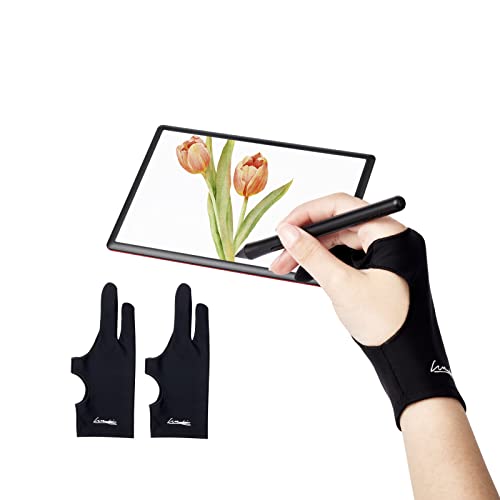
A smudge glove sits in an odd place in a roundup of screen tablets, but anyone who’s rested a sweaty palm on a glossy display knows why it earns a spot. The WooKoudai two-finger glove covers the area where your hand naturally drapes across the screen while leaving the index and thumb free for gesture work. The medium size measures roughly 3.15 by 8.58 inches, which suits most adult hands comfortably.
Because the fixed-finger design reduces slipping, you can stay focused on linework without constantly wiping the screen. The pack includes both a right-hand and left-hand glove, so ambidextrous creators or two-person studios get coverage without buying twice. It pairs well with every pen display in this list and adds polish to sessions where palm contact matters most.
Where It Delivers
- Two-finger cutout keeps gestures and shortcuts natural during sketching
- Smudge guard fabric reduces palm contact marks on glossy displays
- Pack of two means ambidextrous users share one purchase
- Medium sizing fits most adult hand proportions comfortably
Honest Caveats
- Not a tablet, so it only helps if you already own a pen display
- Fabric stretches over time with daily heavy use
Who Will Love This
Illustrators who draw long sessions on glass screens and want fewer interruptions to wipe their palms.
Consider Something Else When
The HUION Kamvas 13 (Gen 3) suits anyone who needs a full pen display rather than just a glove accessory.
The Gen 3 update to the Kamvas 13 keeps the size creators liked while refining the surface. The 13.3-inch panel uses fully laminated Canvas Glass 2.0, which means the protective layer and the LCD sit close enough that the stylus tip feels closer to drawn pixels. Anti-sparkle etching softens harsh reflections under lamp light, so a sketch session in a sunlit studio becomes more workable.
Two physical dials flank the active area, and they map to brush size, zoom, or scrolling depending on your software. The pen display must connect to a computer or laptop, so plan for a working laptop or desktop. For a creator splitting time between home and a co-working space, the slim body slips into a backpack sleeve and wakes up fast once plugged in.
Standout Benefits
- Compact 13.3-inch form factor fits laptop bags and café tables
- Canvas Glass 2.0 lamination reduces parallax for accurate strokes
- Dual physical dials speed up brush and zoom adjustments
- Anti-sparkle surface holds up better under overhead lighting
Trade Offs
- Requires a connected computer, so it isn’t a true standalone
- 13.3 inches may feel tight for full-arm gesture work
Key Specs
Best Suited To
Traveling illustrators and students who already own a capable laptop and want a portable pen display.
Look Elsewhere When
The Frunsi RubensTab T14 suits anyone who wants a standalone tablet and would rather skip the laptop tether.
Pressure levels matter when you sketch hair-thin lines one moment and lay down broad ink the next. The Kamvas Pro 16 V2 ships with the battery-free PW600A pen built on Pentech 4.0, registering 16,384 pressure levels at 5080 LPI (lines per inch). That detail resolution lets the tablet pick up the lightest wrist movement, which is why portrait illustrators and manga inkers tend to gravitate here.
The 15.6-inch panel gives breathing room without taking over a desk, and the three side keys sit under the thumb for quick shortcuts. The PW600A grip has a dust-resistant finish, so studio dust collects less around the buttons. This is a pen display, not a touch tablet, so you’ll route it through a computer or laptop and rely on its driver for mapping.
Points In Its Favor
- 16,384 pressure levels capture subtle wrist pressure shifts
- Battery-free PW600A pen stays light and always ready
- Three side keys streamline workflow shortcuts
- Dust-proof grip finish holds up in busy studios
Small Caveats
- Needs a computer connection, so portability depends on your laptop
- Higher pressure resolution matters mainly for nuanced inking work
Right Fit For
Detail-focused illustrators and comic artists who translate light wrist pressure into visible line variation.
Swap It Out When
The HUION KAMVAS Pro 19 makes more sense for studio creators who need 4K sharpness on a larger canvas.
The 18.4-inch Pro 19 ranks among the larger pen displays you can park on a desk without dedicating a whole workstation to it. The 4K UHD panel at 3840 by 2160 resolution turns photo retouching and detailed illustration into sharper work, especially when zooming in on hair texture or fabric weave. Anti-glare etched canvas glass 2.0 increases surface friction, mimicking the drag of pencil on paper rather than the slippery glide of plastic.
Full lamination cuts the parallax gap, so the cursor sits almost exactly under the pen tip. The PenTech 4.0 sensor reads fine pressure variation, and the anti-sparkle display keeps long editing sessions comfortable. Like other pen displays here, it must connect to a computer to function, so factor in cable routing on your desk before mounting it on a monitor arm.
The Practical Payoff
- 4K UHD resolution sharpens photo and illustration detail work
- Etched canvas glass adds pencil-like drag under the stylus
- Full lamination reduces parallax for accurate cursor tracking
- 18.4-inch canvas handles full-arm painting gestures
Points To Note
- Larger footprint demands a deep desk and proper cable management
- Higher resolution matters most for retouchers and texture-heavy work
Feature Snapshot
Built With In Mind
Studio artists, retouchers, and editors working at a fixed desk with a connected computer.
Reach For A Different Pick When
The XPPen Artist 24 Pro is worth a look for creators who want an even larger 23.8-inch canvas.
A 23.8-inch canvas changes how you paint because there’s finally room for two hands and a reference image at the same time. The XPPen Artist 24 Pro runs a 2.5K QHD IPS panel at 2560 by 1440 resolution with 16.7 million colors, which covers animation, illustration, and editing workflows without leaving the screen feeling cramped. The 178-degree viewing angle helps when collaborators lean in to review a frame.
Twenty physical shortcut keys run along the side, so brush presets, undo, and layer switches stay one tap away. The battery-free stylus delivers 8192 pressure levels and tilt response, and the anti-glare film keeps reflections honest in a bright studio. This is also a pen display, so it requires a Windows, Mac, Chrome, or Linux machine to drive it.
Useful Highlights
- 23.8-inch workspace handles animation and multi-panel layouts
- 20 shortcut keys keep common commands within thumb reach
- Battery-free tilt stylus reduces hand fatigue during long sessions
- Cross-platform support covers Windows, Mac, Chrome, and Linux
Worth Noting
- Large body demands a deep desk and sturdy mounting
- 2.5K resolution falls between Full HD and 4K, so it’s not the sharpest option
Whose Shelf It Belongs On
Animators, illustrators, and video editors who want maximum workspace and physical shortcut access.
A Better Fit Elsewhere
The Wacom Cintiq 16 fits creators who prefer a smaller, lighter pen display from a familiar name.
Standalone tablets remove the friction of dragging a laptop around, and the RubensTab T14 leans fully into that idea. The 14.1-inch Full HD IPS screen at 1920 by 1200 resolution shows vibrant color and wide viewing angles, while the octa-core CPU handles drawing apps without needing a tethered computer. Pre-installed drawing apps and tutorials mean a new user can power it on and start sketching within minutes.
Bonus items ship in the box, which lowers the barrier for beginners who don’t already own accessories. The package suits students, hobbyists, and artists sketching on the go, and the slightly taller 16:10 aspect ratio gives more vertical canvas for portraits. Because it runs on its own processor, you trade raw speed for portability, so heavy multi-layer projects may push the chip harder than a tethered workstation would.
Strong Points
- No computer required, so sketching works anywhere with Wi-Fi or offline
- 14.1-inch FHD IPS display balances size and portability
- Pre-installed apps and tutorials flatten the learning curve
- Octa-core processor handles common drawing apps smoothly
Some Limits To Know
- Standalone chipsets lag behind tethered workstations on heavy files
- App ecosystem may not match desktop-grade software
Quick Facts
Who Should Grab It
Beginners, hobbyists, and students who want a self-contained tablet without managing cables or a laptop.
Not Your Match When
The Frunsi T8 fits creators who want a smaller, more pocketable standalone for quick on-location sketches.
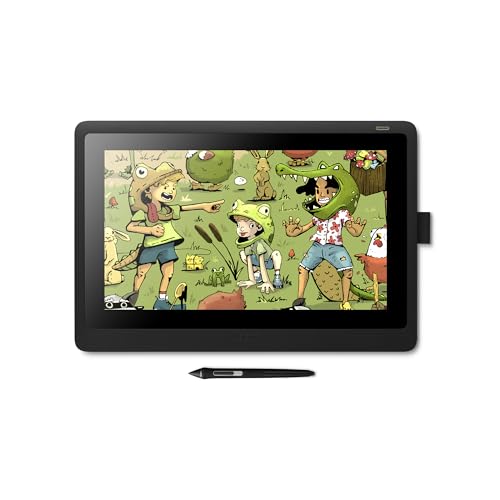
Wacom built its reputation on pen feel, and the Cintiq 16 keeps that lineage going. The 15.4-inch Full HD display runs at a high-contrast panel that handles illustration and animation work, and the included Pro Pen 2 supports tilt response so brush strokes angle naturally when shading. Foldable legs let you angle the screen between flat sketching and propped-up drawing positions.
The unit weighs roughly four pounds and sits about an inch thick, which feels solid on a desk without dominating the workspace. The scratch-resistant exterior holds up to the bumps of daily studio life, and the pen’s pressure curve has the responsive feel that illustrators who grew up on Wacom tend to expect. Like other pen displays in this list, it requires a Mac or PC connection.
Everyday Perks
- Pro Pen 2 with tilt response feels natural for shading work
- Foldable legs adjust the angle without extra stands
- Scratch-resistant exterior handles studio wear and tear
- Full HD panel keeps linework readable on a 15.4-inch canvas
Things To Consider
- Requires connection to a Mac or PC, no standalone mode
- Full HD resolution is solid but not as sharp as 4K peers
Perfect Match For
Working illustrators who value pen feel and want a familiar, dependable pen display from an established brand.
Where A Sibling Pick Shines
The HUION Kamvas Pro 16 V2 suits detail-focused creators who want more pressure levels in the same size class.
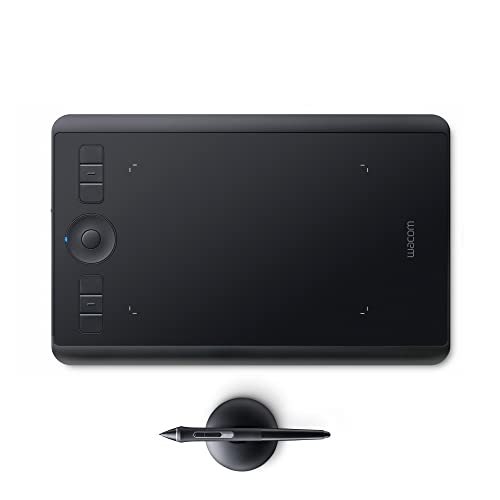
The Intuos Pro Small drops the screen in favor of portability, and that trade-off is the whole point. The active area measures roughly 7 inches diagonally on a 10.6 by 6.7-inch tablet body, which means you watch your work on a separate monitor while your hand sketches on the pad. Wireless connectivity lets the tablet live wherever feels comfortable, even off to the side of a laptop.
Under a pound and super slim, it slips into a small backpack pocket without complaint. The included Pro Pen 2 brings the same responsive pressure curve as the Cintiq line, and the touch ring adds quick scrolling and brush controls. For anyone training hand-eye coordination away from the screen, the gap between eye and hand takes patience, but the payoff is a desk-friendly setup that travels anywhere.
Notable Upsides
- Wireless design clears the desk of tangles
- Lightweight build slips into small bags and backpacks
- Pro Pen 2 delivers familiar Wacom pressure response
- Touch ring speeds up brush and scroll adjustments
Potential Drawbacks
- No built-in screen means watching your monitor while drawing
- Small active area limits sweeping arm gestures
Made For
Travelers and minimalists who prioritize portability and wireless freedom over a built-in display.
Skip It When
The HUION Kamvas 13 (Gen 3) suits anyone who wants to draw directly on a screen instead of looking up.
An 8-inch standalone tablet sounds small until you remember how much sketching fits on a phone screen. The Frunsi T8 runs Android 13 with a 1200 by 800 resolution display, so it handles drawing apps and reference images without a tethered computer. Designers who scribble concepts on café tables or in transit appreciate the pocket-sized footprint.
The chipset targets the kind of sketching apps that don’t need workstation-grade power, which keeps the tablet cool and responsive during quick sessions. You can pull it out on a train, sketch a layout, and pocket it again without booting a laptop. The trade-off shows up in heavy multi-layer work where the small screen and modest processor reach their limits.
Features That Help
- 8-inch form factor fits in jacket pockets and small bags
- Android 13 supports a wide range of drawing apps
- Standalone operation removes laptop tethering
- Compact screen encourages quick concept sketches
A Few Limitations
- Small screen cramps detailed illustrations
- Modest processor struggles with complex multi-layer files
Who It Suits Best
Sketchers and designers who want a pocket-sized tablet for on-location concepts and quick studies.
Where Another Pick Suits Better
The Frunsi RubensTab T14 fits creators who want a bigger standalone canvas without giving up the no-computer approach.
The RubensTab T11 Pro sits between the pocket-friendly T8 and the larger T14, and that middle position works well for many creators. The 10.1-inch Full HD IPS display at 1920 by 1200 resolution delivers sharp color and wide viewing angles in a body that’s still backpack-friendly. It runs independently of a computer, so students and casual creators can sketch anywhere they find a comfortable seat.
The compact size suits note-taking, character studies, and comic page thumbnails without feeling as cramped as a phone-sized tablet. For artists, students, and professionals who want a balance between screen real estate and portability, the T11 Pro offers a middle path. As with other standalone tablets, heavy production work with dozens of layers may push the hardware harder than a tethered setup would.
What Helps Most
- 10.1-inch FHD IPS display balances size and clarity
- Standalone operation works without a connected computer
- Compact body fits small bags and backpacks
- Wide viewing angles help when sharing work with collaborators
Less Ideal Details
- Standalone chipsets lag behind tethered workstations on heavy files
- Smaller screen than the T14 means less room for full compositions
Feature Card
The Right Fit
Students, casual creators, and professionals who want a portable standalone tablet with a balanced screen size.
Another Choice May Suit
The HUION Kamvas 13 (Gen 3) makes more sense for creators who want a screen tablet that connects to a laptop.
What Matters Most Before Choosing Your Next Drawing Screen
Screen size shapes how you work more than almost any other spec. A 13-inch canvas fits in a bag and handles quick sketches, while a 19-inch or 24-inch display gives your arms room to move and your reference images space to breathe. For most home studios, 15 to 16 inches hits the sweet spot between desk footprint and usable workspace, though dedicated studios often push toward 18 inches and beyond.
Lamination, the process of bonding the touch sensor and LCD into one layer, matters more than people expect. Fully laminated panels reduce the parallax gap, meaning the cursor sits closer to the pen tip, which makes aiming feel intuitive rather than frustrating. Anti-glare etched glass adds subtle drag under the stylus, mimicking the feel of pencil on paper, and that texture helps with control during long sessions.
Pressure levels describe how many distinct pressure steps the stylus reads between a light touch and a firm press. Anything above 8192 covers most illustration needs, but 16,384 levels reward artists who vary line weight through wrist pressure alone. Tilt support adds shading accuracy when angling the pen for broad strokes.
Standalone versus tethered splits the category in two. Standalone tablets like the RubensTab series run their own operating system, which frees you from a laptop but caps raw performance. Tethered pen displays like the Wacom Cintiq 16 or HUION Kamvas series rely on a connected computer, which means heavier software and larger files run smoother. The right choice depends on whether portability or workstation power matters more to your daily routine.
Key Considerations Across These Picks
Common Shopping Slip Ups
A frequent mistake is buying the largest screen without measuring the desk first. A 24-inch pen display sounds generous until it overhangs the edge of a small table or blocks a secondary monitor. Another slip is overlooking cable management, since tethered pen displays need HDMI or DisplayPort plus USB runs that quickly tangle without planning.
Buyers sometimes assume all styluses feel the same, then discover that battery-free pens with hard plastic nibs scratch the screen faster than expected. Nib wear is normal, but pairing the tablet with a nib set from the start reduces long-term surface wear. Glossy screens also show smudges heavily, which is where a smudge glove earns its keep.
Where The Extra Money Goes
Premium tiers buy sharper panels, higher pressure resolution, and better surface treatments. A 4K UHD display shows fine texture detail that Full HD blurs, which matters for retouchers and texture-heavy illustrators. Etched canvas glass adds drag under the pen tip, and that small friction often translates into better line control during long sessions.
Higher price points also tend to fund better driver support, longer warranties, and tighter quality control. The honest read is that a mid-range tablet covers most hobbyist needs, while a premium model earns its keep when you stare at the screen eight hours a day and need the extra sharpness and texture to keep your hand comfortable.
Frequently Asked Questions
Do screen tablets need a computer to work?
Pen displays require a connected computer or laptop to run, while standalone tablets have built-in processors and operating systems that handle drawing apps on their own. Your choice depends on whether you prefer portability or workstation power.
What size screen tablet should I get?
A 13 to 16-inch screen handles most illustration and study needs without dominating a desk. Larger 18 to 24-inch displays suit studio work where reference images and full-arm gestures matter more than portability.
How important is pressure sensitivity?
Pressure sensitivity affects how naturally your line weight changes with pen pressure. Anything from 4096 levels upward covers casual sketching, while 8192 to 16,384 levels reward artists who lean on subtle wrist pressure for variation.
Can I use a screen tablet without drawing on the screen?
Yes, non-display tablets like the Wacom Intuos Pro let you draw on a pad while watching your work on a separate monitor. The trade-off is hand-eye coordination, since your pen and cursor live in different places.
What maintenance do pen displays need?
Glass surfaces collect dust and fingerprints, so a microfiber cloth and screen-safe cleaner keep the panel clear. Pen nibs wear down with use, so keeping spare nibs on hand avoids mid-project interruptions when a tip finally flattens.
The Takeaway
The best screen tablet is the one that matches how you actually work, whether that’s sketching in a café on a standalone pad or anchoring a studio with a 4K tethered display. Start with size, lamination, and standalone-versus-tethered, then narrow by pen feel and pressure resolution. With the options above, there’s a solid match for beginners, working illustrators, and studio creators alike, and the right tool tends to disappear into your workflow once you start using it.
