

A framing nailer firing three feet from your skull, a circular saw screaming through plywood, an angle grinder whining on metal: any one of those will leave your ears ringing before lunch. Construction headphones solve a simple problem with a layered answer, and I find most shoppers underestimate how much the right pair changes a workday. The nine picks below cover electronic muffs that listen for you, classic passive earmuffs, kid-friendly options for young helpers on weekend projects, and a couple of add-ons for people who already own a favorite pair.
Your Options, Compared

Walker’s Razor Slim Electronic Muff

3M Peltor Optime 101 Over-the-Head Earmuff

Dr.meter Noise Cancelling Headphones 2-Pack

LUXA2 E-One Aluminum Universal Headphone Stand
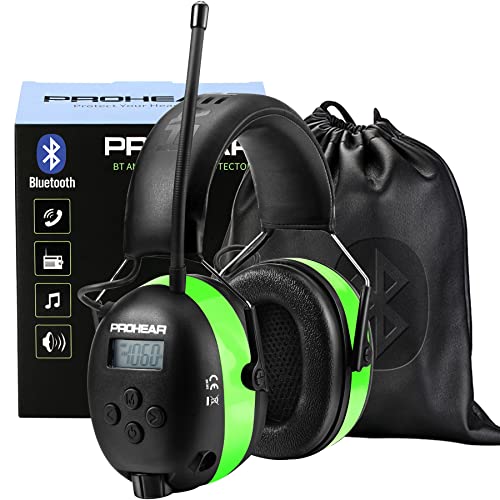
PROHEAR 033 Bluetooth 5.4 Hearing Protection

PROHEAR 033 Bluetooth 5.4 Hearing Protection (Purple)

BLXSounds USB-C Wired Earbuds

PROHEAR 039 Bluetooth 6.0 Hi-Fi Hearing Protection

Gaosen 50-Pack Kids Classroom Earbuds
More Details On Our Top Picks
Walker’s Razor Slim sits in a sweet spot between traditional foam-filled muffs and bulky over-ear headsets, and that slim profile matters on long days. The cups sit closer to the head than the 3M Peltor Optime 101 I cover next, so they snag less on overhead joists and ladder rungs.
Built-in microphones amplify ambient sound when no tool is running and clamp down hard when the decibel level rises, which is the whole point of an electronic muff. You hear a coworker asking about a measurement, then the muffs immediately quiet a passing chop saw.
Real-World Strengths
- Slim cup geometry reduces interference with hard hats and shoulder straps.
- Ambient sound amplification helps you catch verbal cues without removing the muffs.
- Audio input jack on most Walker’s models lets you pipe in a phone or two-way radio.
- Lower-profile headband tends to layer comfortably under most safety helmets.
Things To Consider
- Electronic components require AAA batteries and routine replacement.
- Compression circuitry reacts in milliseconds but still misses the very first instant of a spike.
Best Suited To
Range shooters, lumber-yard workers, and DIYers who want amplified situational awareness alongside solid passive protection.
A Better Fit Elsewhere
Anyone who works only around steady-state noise and never needs conversation pickup should look at the 3M Peltor Optime 101 instead.
The 3M Peltor Optime 101 is the answer to a very specific question: how much noise reduction can you get from a pair of muffs with zero electronics, zero batteries, and zero moving parts? The NRR 27 dB rating (NRR, or Noise Reduction Rating, is the U.S. method for measuring how many decibels a protector knocks off) tells you most of what you need to know.
Green cups, a low-profile headband, and a forgiving clamping force make this the kind of muff a contractor buys once and replaces every few years. Unlike Walker’s Razor Slim, there’s no ambient microphone to amplify voices.
A Strong Showing
- No batteries, no switches, no charging routine to forget about.
- Lightweight plastic headband keeps fatigue down during long shifts.
- Universal fit works over glasses and most half-face respirators.
- Tends to outlast electronic muffs in hot, dusty environments.
Honest Caveats
- Passive design blocks conversation along with noise.
- Cushions compress over time and owners commonly report needing replacement pads after heavy use.
Right Fit For
Industrial workers and homeowners running long sessions with table saws, planers, or air compressors who value reliability over features.
Swap It Out When
Parents shopping for younger helpers should pivot to the Dr.meter 2-pack, which is sized and priced for that use case.
Dr.meter shows up with two pairs in a single box, which is the kind of math that matters when a parent and a teenager both want hearing protection for a Saturday demolition day. The shells are sized smaller than the 3M Optime 101, which sits well on younger heads.
Memory foam cores wrapped in PU leather padding create a soft seal, and the SNR 27 dB rating (SNR, or Single Number Rating, is the European attenuation measurement) lines up with what most adults expect from entry-level industrial muffs. For most family projects around the house, that’s plenty.
Strengths Worth Knowing
- Two-pair packaging cuts the per-set cost meaningfully.
- Soft padding lowers pressure points during longer wear sessions.
- Adjustable headband fits a wide range of head sizes.
Points To Note
- Lower clamping force means a less aggressive seal on very small ears.
- PU leather pads can absorb sweat and require wiping down after heavy use.
Made For
Parents and kids doing weekend woodworking, lawn care, or shooting practice where comfort and a friendly fit matter more than extreme attenuation.
Consider Something Else When
Anyone running tools all day professionally will be better served by the 3M Peltor Optime 101’s heavier-duty build.
The LUXA2 E-One is the odd one out on this list, and I think it’s worth including because half the people who buy earmuffs end up tossing them on a bench where the cushions get crushed. A solid aluminum stand solves that problem in one piece of metal.
Unlike Walker’s Razor Slim or the PROHEAR models below, this isn’t worn on your head. It hangs on the wall or sits on a desk and holds any over-ear set you own, from Beats to Bose to Audio-Technica and beyond. The brushed silver finish is the only color option in the source data, which keeps the choice simple.
Useful Highlights
- Solid aluminum body resists bending and stays planted on a workbench.
- Universal hook geometry fits most over-ear headphone shapes.
- Diamond-cut finish reads as a deliberate piece of shop furniture.
Worth Bearing In Mind
- Mounting hardware may be needed depending on where you install it.
- Does not protect hearing by itself; it’s an accessory for other muffs.
Whose Shelf It Belongs On
Anyone with a favorite pair of over-ear muffs who wants them off the workbench and out of harm’s way between sessions.
Another Choice May Suit
Shoppers who want hearing protection plus storage should pair the 3M Peltor Optime 101 with this stand instead of buying two separate electronic muffs.
PROHEAR 033 crams a surprising amount of audio gear into a hearing protector. Bluetooth 5.4 handles phone streams, a built-in AM/FM radio pulls in stations without a phone, and the 1500 mAh rechargeable battery keeps the whole package going through long mowing days.
Compared to Walker’s Razor Slim, the PROHEAR leans more toward entertainment and less toward ambient amplification. The 31 dB SNR rating (Single Number Rating, the European attenuation standard) puts it in the same general protection tier as the 3M Optime 101.
Positive Takeaways
- Bluetooth 5.4 with stable phone pairing for calls and music on site.
- AM/FM tuner means no phone required for background audio.
- Rechargeable cell avoids the recurring cost of replacement batteries.
- Soft padded headband helps during long outdoor sessions.
Where It Is Less Suited
- Heavier than passive muffs because of the electronics and battery.
- Electronics add points of failure when exposed to heavy dust or rain.
Built With In Mind
Yard workers, farmers, and contractors who spend hours on a mower or tractor and want entertainment without sacrificing protection.
Not Your Match When
Anyone who only needs passive protection and values ultralight gear should stay with the 3M Peltor Optime 101.
The purple PROHEAR 033 is the same platform as the previous PROHEAR model with two notable tweaks: a stated 58-hour playback figure and a color option that’s easier to spot in a crowded job box. Owners who lose track of black muffs in a sea of dark gear will appreciate that small change.
The ABS shell, padded headband, and skin-friendly ear cushion stay consistent with the earlier 033. The product ships with a carry bag, which the source notes, and that bag matters when muffs live in a truck bed half the week.
Benefits That Matter
- Extended playback time per charge reduces mid-week recharging.
- Carry bag keeps dust off the cushions between jobs.
- Color choice improves visibility on cluttered workbenches.
- Memory for up to 10 AM and 10 FM presets saves channel-surfing time.
Potential Compromises
- Larger color option list means inventory varies by region.
- Same charging routine required; not a fit for shops without USB power.
Quick Facts
Who It Suits Best
Frequent outdoor users who want long battery life, a color that stands out, and a bag to keep the cushions clean between sessions.
Skip It When
Shoppers who already own the original PROHEAR 033 in black should save the money rather than buy the same hardware twice.
The BLXSounds USB-C earbuds are the only earphones on this list, and they aren’t really for blocking tool noise. They’re for taking a phone call, listening to a job-site playlist, or following a wiring tutorial video between cuts without dropping a Bluetooth connection.
Compatibility with iPhone 15 through iPhone 17 series, plus a long list of Pixel, Galaxy, and Moto devices, makes this a “fits whatever’s in my pocket” option. The 14.2 mm dynamic driver handles music at a respectable volume for the size.
Everyday Perks
- USB-C plug-and-play needs no batteries or pairing steps.
- Broad phone compatibility across modern iPhone and Android models.
- Lightweight enough to live in a pocket most of the day.
Small Caveats
- No hearing protection rating, so they should never replace proper muffs near loud tools.
- Wired design can snag when working overhead or crawling through joists.
Perfect Match For
Tradespeople who want a backup pair of earbuds for calls and audio on phones that lack a headphone jack.
Look Elsewhere When
Anyone shopping for actual hearing protection should move up to the PROHEAR 033 or the 3M Peltor Optime 101 instead.
PROHEAR 039 moves the Bluetooth version up to 6.0 and leans into hi-fi audio playback, which is a meaningful jump if you stream a lot of music while you work. The 1500 mAh battery returns from the 033 line, and the manufacturer claims up to four weeks of runtime under typical use.
Compared to Walker’s Razor Slim, this is the entertainment-first pick. Compared to the purple PROHEAR 033, it’s the model to choose when audio quality matters more than a specific color option. OSHA compliance language appears in the source, which signals the brand markets this for regulated workplaces.
Real Benefits
- Bluetooth 6.0 supports the latest phones and improves connection stability.
- Hi-fi tuning makes music and podcasts more enjoyable at safe volumes.
- Large battery capacity reduces how often the muffs need to come off the charger.
Trade-Offs To Consider
- Newer protocol means slightly higher cost than older 033 models.
- Headsets marketed for OSHA-regulated work often sit heavier on the head.
Who Should Grab It
Tech-forward users who want the newest Bluetooth generation and prioritize music quality over budget.
Reach For A Different Pick When
Anyone who rarely streams audio will do just as well with the original PROHEAR 033 and save the difference.
The Gaosen 50-pack belongs in a classroom, computer lab, or training session, not a jobsite. Each pair is individually bagged and sealed, comes in mixed colors, and uses a standard 3.5 mm jack that fits most Chromebooks, PCs, and older laptops.
Silicone tips keep the buds comfortable for small ears, and the source describes the cord as built for repeated handling. Schools shopping in bulk will care about that detail more than any decibel rating, since this isn’t hearing protection at all.
What Earns Its Place
- Individually bagged pairs simplify distribution in classrooms.
- Soft silicone tips suit younger students and small ear canals.
- 3.5 mm jack works with most school-issued computers without adapters.
A Few Limitations
- Wired design means cable tangles in younger users’ hands.
- No hearing protection rating, so these are audio-only accessories.
The Right Fit
Teachers and IT coordinators outfitting a classroom, library, or training center with affordable mixed-color earbuds.
Where Another Pick Suits Better
Anyone shopping for hearing protection around tools should pivot to the Dr.meter 2-pack for actual muffs.
What To Weigh Before Picking Construction Headphones
Matching Protection To The Noise
Noise Reduction Rating and Single Number Rating tell you how much attenuation a muff provides in decibels, but they only matter in the context of your loudest tool. A weekend hobbyist running a drill and jigsaw sees a much quieter environment than a framer running a compressor and nailer all day. Choose a rating that exceeds your worst-case tool by a sensible margin, not the loudest number on the shelf.
Electronic Versus Passive Muffs
Electronic muffs like Walker’s Razor Slim and the PROHEAR models add microphones, speakers, and Bluetooth. Passive muffs like the 3M Peltor Optime 101 block everything. The right answer depends on whether you need to hear coworkers, radios, or warning signals. Electronic muffs need charging or batteries, which adds a maintenance step to your routine.
Comfort Over Long Shifts
Headband pressure, cushion material, and total weight decide whether you’ll actually wear a pair for eight hours. PU leather cushions, like those on the Dr.meter 2-pack, feel soft but absorb sweat in summer. Lighter passive designs often win on comfort for all-day wear, even when they lack features.
Fit With Other Safety Gear
Hard hats, safety glasses, and respirators change how a pair of muffs sits on your head. Slim-cup designs tend to play nicer with hard hat suspensions, while wider cups can interfere with glasses arms. Try a pair on with the rest of your PPE before committing.
Key Considerations Across These Picks
Where Shoppers Go Wrong
The biggest slip-up I see is buying the highest-decibel rating without checking fit. A muff that leaks around glasses or behind a hard hat delivers a fraction of its rated protection. Test the seal before each shift by pushing the cups in: a properly sealed muff will feel like a pressure change.
Where The Extra Money Goes
Higher-tier electronic muffs spend the extra dollars on microphone quality, Bluetooth stability, and battery capacity. The PROHEAR 039 justifies its position over the 033 mostly through newer Bluetooth and longer playback. If you never stream audio or take calls, that premium buys you nothing.
Frequently Asked Questions
What NRR rating do I need for construction work?
Most power tools fall between 90 and 110 decibels, and OSHA’s general guidance points to hearing protection that brings the exposure under 85 dB at the ear. Muffs in the 25 to 31 dB range cover the common residential and small-contractor scenarios.
Are electronic muffs safe for everyday use?
Yes, as long as the muffs still meet a recognized attenuation rating and the electronic circuit compresses loud spikes rather than passing them through. Walker’s Razor Slim and the PROHEAR models both compress loud transients before they reach the ear.
Can I wear construction headphones with a hard hat?
Most over-ear muffs are designed to layer under or beside a hard hat suspension. Slim-cup designs like Walker’s Razor Slim and the 3M Optime 101 typically fit more cleanly under hard hats than wide-cup alternatives.
How long do rechargeable muff batteries last?
Run time varies by model and listening volume, but PROHEAR’s 033 line cites up to 58 hours of playback in some configurations. Real-world run time depends on how loud you stream and whether the radio is in constant use.
Are kid-sized muffs safe for adults?
Larger adults wearing kid-sized muffs usually get a poor seal and reduced protection. A better path is the Dr.meter 2-pack or similar adjustable models, which expand to fit adult heads and still work on smaller frames.
Bottom Line
Construction headphones aren’t a single product, they’re a small category with a few honest trade-offs between protection level, comfort, and features. Anyone running loud tools for a living should treat the muff the way they treat safety glasses, as essential gear that gets replaced when the cushions compress. Pick the pair that matches your loudest tool, fits the rest of your PPE, and feels comfortable enough to actually wear all day.