
A projector screen’s surface color quietly decides whether your image looks washed out or vivid. White, gray, and ambient-light-rejecting finishes each handle light differently, and the right pick depends on the room, the projector, and how much daylight sneaks in. I’ve spent years helping people match screens to their setup, and the gap between a wrong and right screen color is the difference between a sharp picture and one that looks faded the second a lamp turns on. This list pulls together projectors and screens that work together to solve that exact problem.
How The Shortlist Stacks Up

Godox AD300Pro II 300Ws TTL Outdoor Flash
Epson Home Cinema 2150 Wireless Full HD 1080p Projector

BenQ HT2150ST 1080P Short Throw Projector

Epson Pro EX9220 1080p+ WUXGA Wireless Projector
Elite Screens Starling Tab-Tension 2 CineGrey 4D 140″

Epson VS250 SVGA 3,200 Lumens HDMI Projector

Epson VS260 3-Chip 3LCD XGA Projector

Elite Screens CineTension 3 Motorized 100-inch Screen
BenQ HT2050A 1080P Home Theater Projector
More Details On Our Top Picks
The Godox AD300Pro II sits in a category of its own on this list, since it’s a strobe rather than a screen or projector, but it pairs naturally with anyone projecting a colored backdrop or lighting a screen surface for content shoots. The 300Ws output delivers solid fill power for a headshot or product setup, and the body is light enough (about 1.2kg) to mount on a compact stand or hand off to a location assistant.
For creators working with projected color washes, the consistent color temperature across the power range matters more than raw wattage. Owners commonly report reliable color from frame to frame, which keeps the screen tone steady through long sessions.
Features That Help
- High-Speed Sync support up to 1/8000s for shutter-heavy workflows.
- 10 power levels with fine ±0.1-stop tuning for precise exposure control.
- Lightweight body around 1.2kg, friendly to traveling creators.
- Stable color output that keeps backdrop tone consistent shot to shot.
Trade-Offs Worth Knowing
- Requires separate triggers and modifiers to reach full versatility.
- Battery life drops noticeably when shooting full-power bursts back to back.
Built With In Mind
Portrait, product, and hybrid creators who want a portable strobe that keeps color stable while they shoot against or around a projection surface.
Look Elsewhere When
The Epson Home Cinema 2150 makes more sense for someone whose actual goal is putting movies on a wall rather than lighting a scene.
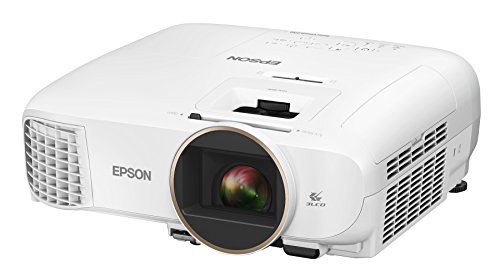
The Epson Home Cinema 2150 is the kind of projector I recommend to friends who want a real big-screen setup without running wires across the room. Its 2,500 lumens of equal color and white brightness (the matching of these two values is what helps colors avoid looking dim next to the whites) keeps skin tones and brand colors honest even when a lamp stays on. Miracast and HDMI make streaming sources easy, and the 3LCD engine avoids the rainbow artifacts some folks see on single-chip designs.
It’s a step up from the brighter office-style Epson Pro EX9220 coming later, trading raw lumens for richer color calibration. For most living rooms that pull in some ambient light, that’s a fair swap.
Useful Strengths
- 2,500 lumens of equal color and white output for balanced images.
- Wireless Miracast streaming cuts down on cable clutter.
- 3LCD engine produces full RGB color frames without distracting rainbow effects.
- Full HD 1080p resolution delivers sharp film and game detail.
Some Limits To Know
- Not designed for fully lit rooms; benefits from controlled lighting or an ALR screen like the Starling Tab-Tension 2.
- Built-in speaker is fine for casual viewing but lacks body for movies.
Feature Snapshot
Made For
Living-room movie fans who want wireless streaming, accurate color, and a setup that works without a dedicated blacked-out theater.
Where A Sibling Pick Shines
The Epson Pro EX9220 fits better in bright conference spaces where the 2150’s lumen count starts to feel modest.
The BenQ HT2150ST earns its spot for gamers who don’t have room for a coffee table between the couch and the screen. A 100-inch picture from about three feet away (the short-throw ratio) means the projector can sit on a console without casting shadows across the image. The 96% Rec.709 color coverage (a measure of how close the projector gets to the HDTV broadcast standard) is the same color spec you’ll find on the BenQ HT2050A, but tuned for tighter spaces.
Low input lag is the headline feature here. For fast-twitch console play, that responsiveness matters more than resolution alone, and BenQ built a dedicated game mode that prioritizes speed.
Useful Highlights
- Short-throw lens projects 100 inches from around three feet.
- 96% Rec.709 color accuracy produces cinema-grade tones.
- Low input lag with game mode for responsive console play.
- Up to 300-inch maximum image for big-screen nights.
Points To Note
- 20W built-in speaker is decent but external audio improves impact.
- 2,200 lumens is comfortable in dim rooms and starts to wash out under strong daylight.
Right Fit For
Console and PC gamers in small rooms who want a huge image, accurate color, and a fast response for twitch gameplay.
Consider Something Else When
Anyone wanting a longer-throw projector for a larger dedicated theater should look at the BenQ HT2050A later in this list.
The Epson Pro EX9220 is what I picture when a client calls about a boardroom projector that has to fight fluorescent lights. Its 3,600 lumens of equal color and white brightness push past the 2150’s 2,500 by a wide margin, and the WUXGA resolution (1920×1200, slightly taller than standard 1080p) gives spreadsheets and engineering diagrams extra room to breathe without squishing detail.
Compared to the gaming-focused BenQ HT2150ST, this model trades short-throw flexibility for raw brightness and a wider color gamut. For offices and classrooms, that’s the right call.
Advantages To Know
- 3,600 lumens equal color/white output handles well-lit rooms confidently.
- WUXGA resolution (1920×1200) offers more vertical space than standard 1080p.
- Wireless Miracast mirroring works with Android and Windows devices.
- 3LCD engine keeps color output faithful without rainbow artifacts.
Where It Is Less Suited
- Bulky compared to portable picks like the Epson VS250.
- No dedicated game mode, so console gaming feels sluggish on this body.
Best Suited To
Offices, classrooms, and presentation-heavy spaces that need a bright, color-accurate image under fluorescent lighting.
Swap It Out When
Console gamers should head to the BenQ HT2150ST for its low input lag instead.
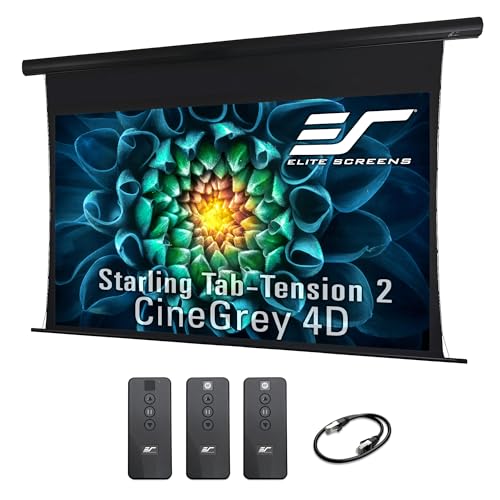
The Elite Screens Starling Tab-Tension 2 is the screen I’d recommend when someone asks about projector colors in a bright room. The CineGrey 4D material is an ambient-light-rejecting (ALR) surface, meaning it absorbs or deflects light coming from the sides and ceiling while directing the projector’s beam back at the viewer. Tab tensioning keeps the 140-inch surface flat, which matters on larger sizes where waves and creases show up in geometric patterns.
This is the only true ALR screen in the lineup. Against the motorized CineTension 3 below, the trade is screen size and material tech versus price and simpler white surface.
What Makes Sense
- ALR CineGrey 4D material rejects ceiling and side light for daytime viewing.
- 140-inch diagonal image with 16:9 format suits modern living rooms.
- Tab-tensioned design keeps the surface smooth and ripple-free.
- Electric drop-down housing tucks out of sight when not in use.
Honest Caveats
- Larger case requires careful ceiling-mount planning.
- ALR material shifts color slightly cooler than a pure white screen.
Feature Snapshot
Who Should Grab It
Homeowners with windows and ceiling lights who want a projector that still looks vivid without painting the room black.
Skip It When
A smaller room or budget build suits the Elite Screens CineTension 3 better.
The Epson VS250 is a budget-first workhorse. Its 3,200 lumens of equal color and white brightness are higher than the Home Cinema 2150, but the resolution drops to SVGA (800×600), which is fine for text-heavy slides and classroom charts. Owners commonly pair it with a plain white screen or a basic wall when the goal is just legibility.
It lacks the wireless streaming of the 2150 and the XGA clarity of the VS260 coming up next, but it makes sense for tight budgets where portability beats pixel count.
The Helpful Details
- 3,200 lumens equal color/white output for bright rooms.
- Lightweight body slips into a bag for travel between rooms.
- HDMI input accepts modern laptops and streaming sticks.
- 3LCD engine avoids the rainbow effect common to budget DLPs.
Practical Considerations
- SVGA resolution looks soft on detailed spreadsheets and HD video.
- No wireless mirroring; HDMI cable or adapter required.
Whose Shelf It Belongs On
Teachers, presenters, and small-business owners who need a bright, no-frills projector for slide decks and basic video.
Another Choice May Suit
The Epson VS260 is a better call when XGA resolution matters for clearer text.
The Epson VS260 takes everything the VS250 does well and bumps the resolution to XGA (1024×768), which is a noticeable jump in text clarity for spreadsheets and charts. The 3,300-lumen output is slightly brighter too, and the built-in picture-skew sensor automatically squares the image, saving setup time in shared meeting rooms.
It’s the cleanest middle ground in the Epson VS line, sitting above the VS250 on clarity and below the Pro EX9220 on raw brightness. The 3-chip 3LCD engine displays the full RGB signal for every frame, which is the technical reason colors look accurate without any rainbow shimmer.
Notable Upsides
- 3,300 lumens of equal color and white brightness handle lit rooms.
- XGA resolution (1024×768) renders text crisply for office work.
- Auto keystone correction squares the image without manual fiddling.
- HDMI port pairs easily with streaming sticks and laptops.
Details To Watch
- Built-in speaker is functional but light on bass.
- XGA falls short of 1080p for modern video presentations.
Perfect Match For
Small to mid-size meeting rooms where auto keystone and crisp text save time during fast-paced sessions.
Reach For A Different Pick When
The Epson Pro EX9220 is the better fit for larger rooms that need full 1080p+ resolution and wireless mirroring.
The Elite Screens CineTension 3 is a straightforward motorized drop-down screen that fits comfortably in most living-room setups. The 100-inch CineWhite material (1.1 gain, meaning it reflects slightly more light back than a neutral surface) provides a wide 180-degree viewing angle, which helps when seating stretches across a sectional sofa.
It pairs nicely with projectors like the BenQ HT2050A later in the list, where accurate color matters more than ALR rejection. Cleaning requires nothing more than mild soap and water, a small perk owners appreciate over fabric screens.
Positive Takeaways
- Motorized drop-down housing stows cleanly when not in use.
- CineWhite 1.1 gain surface balances brightness and color accuracy.
- 180-degree viewing angle suits wide seating layouts.
- Compatible with ultra-short-throw and standard projectors.
Things To Weigh
- White surface loses contrast in rooms with strong ambient light.
- Motor adds a moving part that may need service over years of daily use.
Feature Snapshot
Who Will Love This
Living-room owners who want a clean, motorized screen that disappears into the ceiling when the show is over.
Not Your Match When
The Elite Screens Starling Tab-Tension 2 fits better in rooms where ambient light washes out white surfaces.
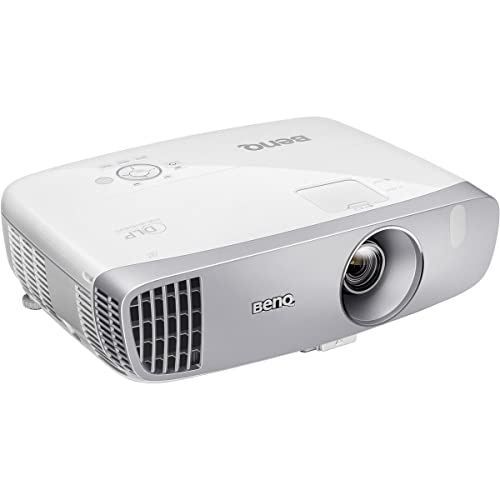
The BenQ HT2050A closes the list with a balance of accurate color and low input lag that works for both movie watchers and gamers. The 96% Rec.709 coverage matches what the HT2150ST offers, but with a longer throw that suits traditional theater rooms where the projector sits behind the seating area.
2D keystone correction (a digital adjustment that squares the image when the projector can’t sit perfectly perpendicular to the screen) makes placement forgiving in odd-shaped rooms. For dedicated theaters where the projector mounts to the ceiling or back shelf, this is a thoughtful, well-rounded pick.
Where It Delivers
- 96% Rec.709 color accuracy for film-faithful reproduction.
- Low 16ms input lag supports responsive console gaming.
- 2D keystone correction eases placement in awkward rooms.
- 1080p resolution with flexible HDMI and USB inputs.
Soft Spots
- 2,200 lumens performs best with light control.
- No wireless streaming built in, so an external device is needed.
Best Suited To
Dedicated home theater builders who want cinematic color accuracy and a projector that handles gaming nights just as gracefully.
A Better Fit Elsewhere
The BenQ HT2150ST is the right call for tight rooms where short-throw projection fits the layout.
Picking The Right Screen Color For Your Setup
Screen color shapes every other decision, from projector brightness to room paint. White surfaces give the truest color reproduction and work well in fully darkened rooms with strong projectors. Gray screens (often called “high-contrast gray”) add a subtle tint that deepens black levels, which helps when some ambient light sneaks in. Ambient-light-rejecting (ALR) materials go further by physically steering stray light away from the viewing cone, and they shine in living rooms with windows.
Room Light And Surroundings
A pitch-dark dedicated theater is the easiest case, since any reasonable projector paired with a white screen produces rich color. Living rooms with lamps, windows, or light-colored walls benefit from gray or ALR surfaces, since those screens absorb the stray light that would otherwise wash out the picture. For projectors under 2,500 lumens, a darker gray surface tends to look more saturated because the screen itself is doing some of the contrast work for the projector.
Projector Brightness And Resolution
Higher-lumen projectors handle white screens well even with light present. Models in the 3,000+ lumen range, like the Epson Pro EX9220 or VS260, push enough light that color accuracy holds up on a white surface. Lower-lumen projectors (under 2,500) look more washed out on white in bright rooms, which is where gray and ALR finishes earn their keep. Resolution matters too: 1080p and above reveal subtle color gradations, so a calibrated screen material maximizes that detail.
Viewing Distance And Seating
Wider seating layouts benefit from screens with broad viewing angles. The Elite Screens CineTension 3’s 180-degree cone keeps color and brightness even for viewers sitting off to the side. For a single row of seats centered on the screen, a narrower viewing angle is fine and can sometimes improve contrast at the sweet spot.
Installation And Maintenance
Motorized drop-down screens look clean but introduce moving parts that may need service over time. Fixed-frame screens stay taut with no motor, at the cost of a permanent wall fixture. For cleaning, smooth-surface screens like CineWhite tolerate mild soap and water, while fabric-style ALR materials need gentler care to avoid damaging the optical coating.
Key Considerations Across These Picks
Pitfalls Shoppers Hit
The biggest mistake I see is matching a bright projector to a dark ALR screen and assuming the picture will dim. ALR materials reject ambient light but also slightly reduce the brightness that reaches the viewer from the projector itself, so pairing them with low-lumen projectors can leave the image looking dull. The flip side is also common: pairing a dim projector with a white screen in a sunny room and wondering why colors look pastel. Screen color and projector output need to match the room’s light level, not just each other in isolation.
What Separates Premium From Basic
The jump from a basic matte-white screen to an ALR finish comes down to the optical layer that redirects light. Premium screens like the Elite Screens Starling Tab-Tension 2 use multi-layer materials engineered to reflect the projector’s beam back at viewers while absorbing off-axis room light. The tab-tensioning system, motorized housing, and remote control add convenience, but the material itself is what lifts color and contrast in challenging lighting. For shoppers in fully controlled rooms, a simpler white surface delivers the same image quality at a much friendlier cost.
Frequently Asked Questions
What screen color gives the most accurate projector image?
White surfaces reproduce color most faithfully in fully darkened rooms. Gray screens trade a small amount of color purity for better black levels and ambient-light resistance, which helps when the room has some lighting.
Does screen color really matter for projector image quality?
Yes. The screen material reflects light back at viewers, and its tint directly affects perceived contrast and color saturation. A mismatched screen color can wash out an otherwise strong projector, while a well-matched one can make a mid-range projector look noticeably better.
Can ambient-light-rejecting screens work with any projector?
ALR screens work with most standard-throw projectors, though some ultra-short-throw designs use specific ALR materials tuned for their unique geometry. Standard ALR surfaces like the CineGrey 4D pair well with conventional ceiling or shelf-mounted projectors.
Is a gray screen better than a white one?
Neither is universally better. Gray screens help in rooms with some ambient light by deepening black levels, while white screens produce the most accurate color in dark rooms. The right answer depends on how much light control the space allows.
Do I need a screen if I can project onto a white wall?
A painted wall works in a pinch, but dedicated screens provide smoother surfaces, accurate gain (light reflection levels), and proper black borders that improve perceived contrast. For casual viewing a wall is fine, but for film and gaming a proper screen makes a visible difference.
Wrap Up
The right screen color depends on your room more than your projector. Dark theaters thrive with white surfaces, while living rooms with windows benefit from gray or ALR materials. Pair the screen to the space, the projector to the screen, and the rest of the setup tends to fall into place on its own.