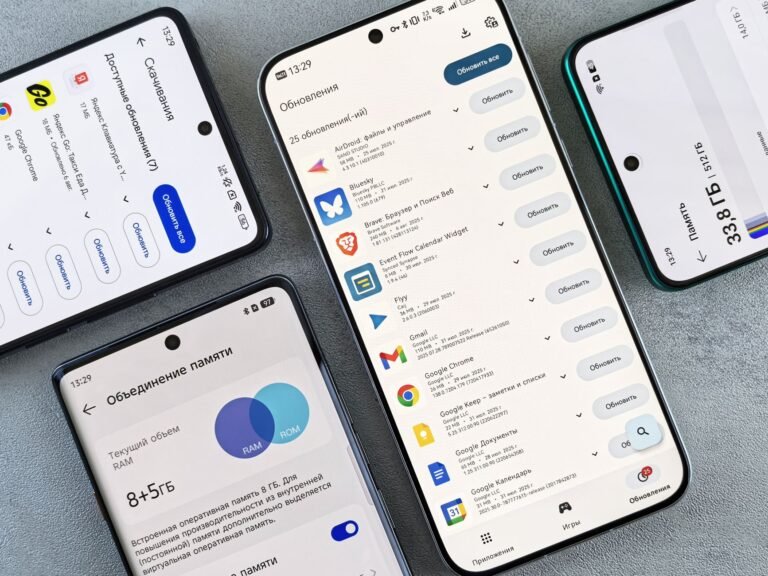

A great phone doesn’t need to cost a fortune. I spend a lot of time helping friends and family find devices that handle daily texts, photos, streaming, and the occasional gaming session without emptying their wallet. The trick is knowing where each phone cuts corners and where it actually delivers, so I’m walking through nine solid options that balance cost, performance, and long-term usability.
How The Shortlist Stacks Up
OnePlus 13R Dual-SIM Unlocked Android Smartphone (Nebula Noir)
Samsung Galaxy A17 4G Dual SIM Smartphone (Black)
Poco M7 Pro 5G 256GB + 12GB (Purple)
Xiaomi Redmi A5 4G LTE 128GB + 4GB (Ocean Blue)
Google Pixel 9a with Gemini 128GB (Obsidian)
Samsung Galaxy S25 FE 256GB AI Smartphone (Navy)
Motorola Moto G35 5G 256GB 8GB RAM (Sage Green)
Google Pixel 4a 128GB Unlocked (Just Black)
Motorola Moto G Power 4/64GB Unlocked (Black)
A Deeper Look At The Lineup
The OnePlus 13R earns its spot at the top of the list by borrowing heavily from flagship territory. Running on the Snapdragon 8 Gen 3, the silicon inside is the same generation you’d find in much pricier devices, and that translates into a noticeably snappier feel when juggling apps or pushing settings in demanding games.
For shoppers weighing it against the Samsung Galaxy A17 later in this roundup, the real differentiator is raw speed. Where the A17 prioritizes a familiar software experience, the 13R leans into performance. The SUPERVOOC charging system at 55W is a practical touch too, cutting downtime for anyone who treats their phone like a daily workhorse.
What Works In Its Favor
- Snapdragon 8 Gen 3 chip delivers flagship-class responsiveness for gaming and heavy multitasking
- 12GB of RAM keeps many apps open simultaneously without aggressive reloads
- 256GB of internal storage holds a large local media library without immediate cloud dependency
- 55W SUPERVOOC charging tops up the battery quickly between meetings or commutes
- Dual-SIM flexibility helps travelers and people juggling work and personal lines
Things To Consider
- No wireless charging, a feature some shoppers expect at this tier
- The Nebula Noir finish attracts fingerprint smudges, requiring frequent wiping
At A Glance
Who It Suits Best
Power users who push their phone with games, video editing, or dozens of browser tabs benefit most from the 13R’s performance headroom.
Where Another Pick Suits Better
Shoppers who prioritize camera quality and software polish should consider the Google Pixel 9a further down this list.
Samsung’s A-series has quietly become the default choice for people who want the Samsung experience without flagship pricing, and the Galaxy A17 continues that tradition. The 6.7-inch display gives plenty of room for video calls and streaming, and the hybrid dual-SIM tray accepts a second line or a microSD card, depending on what you need that day.
Compared to the OnePlus 13R above, this phone trades raw speed for a more accessible price and the polish of One UI. Daily tasks like messaging, maps, and social feeds feel smooth, and the 5000 mAh battery comfortably lasts through a full day of moderate use. USB Type-C charging keeps cable hunting to a minimum.
Useful Strengths
- 6.7-inch display offers generous screen real estate for reading and video
- Hybrid SIM tray lets you add storage or a second line
- 5000 mAh battery easily covers a busy day on a single charge
- USB Type-C port matches cables most people already own
Worth Noting
- 4G only, so shoppers wanting 5G should look at the Moto G35 further down
- The 8GB RAM tier limits heavy multitasking compared to the OnePlus 13R
- Samsung’s pre-installed apps take a chunk of the 256GB out of the box
Feature Snapshot
Made For
Casual users, parents buying a first phone for a teen, and anyone who wants a familiar Samsung interface without paying flagship rates.
Consider Something Else When
Frequent travelers needing 5G bands and expandable performance will find the Poco M7 Pro 5G a better fit.
The Poco M7 Pro 5G punches above what most shoppers expect at this price, and the 120Hz display is the first thing you notice. Scrolling through feeds and switching between apps feels fluid in a way that cheaper 60Hz panels don’t match. The 50MP main camera with optical image stabilization is another standout, giving handheld shots a steadier result than phones twice this age typically offered.
There’s an important compatibility note worth flagging: in the US market, this device is built for T-Mobile, Mint, Tello, and other T-Mobile-network carriers, and it requires an already activated SIM. International shoppers using GSM carriers get broader flexibility. Compared to the Samsung Galaxy A17 above, the M7 Pro adds 5G and a smoother display, though it asks for more carrier homework up front.
Everyday Advantages
- 120Hz display makes everyday scrolling noticeably smoother than 60Hz rivals
- 50MP main camera with OIS steadies handheld photos and low-light shots
- 12GB RAM keeps apps responsive during extended sessions
- Wide 5G band support covers most modern networks
- Hybrid SIM tray accepts a microSD card for additional storage
Practical Considerations
- US buyers must confirm T-Mobile network compatibility before purchasing
- Poco’s MIUI-style software includes ads in some system apps
- Camera processing tends to over-sharpen faces in portrait mode
Right Fit For
Budget-conscious creators who shoot a lot of photos and video, especially on T-Mobile-network lines in the US.
Skip It When
Shoppers locked to AT&T or Verizon should consider the Motorola Moto G35 further down the list.
The Redmi A5 is the phone I point people toward when “as cheap as possible” is the brief, but I still want the device to feel modern. The 6.88-inch display is unusually generous for the category, making it a comfortable option for reading or watching video on the go. The Ocean Blue finish gives it a little personality too.
Compared to the Poco M7 Pro reviewed just above, the A5 makes clear trade-offs: 4GB of RAM rather than 12GB, and 4G LTE instead of 5G. That keeps the price low but limits how many apps can run in the background. For shoppers on T-Mobile, Mint, or Tello in the US, it works as a starter smartphone with the same SIM requirements as its sibling device.
The Helpful Details
- 6.88-inch display is among the largest in the entry-level tier
- 32MP AI-assisted camera captures detailed daylight photos
- 128GB internal storage holds plenty of apps and media
- Dual-SIM plus microSD support lets you expand flexibly
Points To Note
- 4GB RAM struggles with heavy multitasking beyond a handful of apps
- 4G LTE only, leaving 5G users wanting more
- US buyers need an active SIM on a T-Mobile-network carrier
Quick Facts
Who Will Love This
First-time smartphone owners, kids getting their first device, or anyone who needs a reliable backup phone will find the A5 a sensible pick.
Look Elsewhere When
Shoppers wanting smoother performance and 5G should spend a bit more for the Motorola Moto G35 later in this lineup.
The Pixel 9a is the phone I recommend most often to people who care about photography but don’t want to overspend. Google’s computational photography continues to set the standard, and the AI editing tools powered by Gemini make touch-ups feel almost effortless. The all-day battery claim holds up for typical mixed use, and the security infrastructure is the same stack that protects the flagship Pixels.
Against the OnePlus 13R earlier in this article, the 9a trades raw horsepower for smarter software and a longer support window. Shoppers who keep phones for several years will appreciate that Google commits to extended updates on its A-series devices. For the cleanest Android experience short of a flagship, the 9a remains hard to argue with.
The Good Stuff
- Pixel camera system punches well above its price for photos and video
- Gemini-powered AI editing simplifies cleanup and creative tweaks
- All-day battery handles typical work-and-personal use on one charge
- Long software and security update commitment extends device lifespan
- Compact Obsidian finish fits comfortably in one hand
Honest Caveats
- Charging speeds trail the OnePlus 13R’s wired SUPERVOOC system
- 128GB storage fills up quickly for heavy video shooters without cloud backup
Best Suited To
Photo enthusiasts, social media creators, and anyone who values clean Android software with years of guaranteed updates should put the 9a high on their list.
Swap It Out When
Raw gaming and multitasking performance seekers should reach for the OnePlus 13R instead.
The Galaxy S25 FE carries the “Fan Edition” badge, and Samsung uses it to deliver flagship-style features in a lighter, more accessible package. The 6.7-inch display is bright and smooth, and the slim profile makes it comfortable to hold during long calls or commutes. The 256GB storage tier means you won’t run out of room for high-resolution video anytime soon.
Comparing it to the Pixel 9a above, the S25 FE leans into Galaxy AI features like Generative Edit for moving or erasing objects in photos. That kind of tool feels more polished here than on most budget phones. The trade-off is that this sits at the higher end of what I’d still call a budget phone, so it makes most sense for shoppers who want premium touches without jumping to the S25 Ultra tier.
Notable Gains
- 6.7-inch display delivers smooth scrolling and immersive video
- Slim, lightweight build feels easier to carry than most flagships
- 12MP selfie camera with ProVisual Engine sharpens video calls and self-portraits
- Generative Edit AI tools move, resize, and remove objects in photos
- 256GB storage holds a large library without forcing cloud subscriptions
Less Ideal Details
- Sits at the top of the budget range, narrowing its appeal
- Some Galaxy AI features require a Samsung account and internet connection
- Navy colorway shows fingerprints along the glossy back panel
Who Should Grab It
Long-time Samsung users who want AI-powered photo tools and a premium-feeling display without paying flagship prices.
A Better Fit Elsewhere
Shoppers who want the cleanest Android with longer support windows should look at the Google Pixel 9a reviewed earlier.
Motorola has earned a quiet reputation for delivering sensible Android phones without overcomplicating things, and the Moto G35 5G continues that approach. The 6.72-inch FHD+ display gives text and video a clean, sharp look, and the 5000 mAh battery keeps the phone running through busy days. Sage Green is a refreshing departure from the usual black slab, too.
Against the Poco M7 Pro reviewed earlier, the G35 trades a 120Hz refresh rate for a cleaner, more stock-like Android experience with broader US carrier support. The 50MP AI-assisted camera handles most daylight photography well, and 5G connectivity means you’re covered as carriers continue expanding their mid-band networks.
Key Advantages
- 6.72-inch FHD+ display shows sharp text and vibrant colors
- 5G support future-proofs the device as networks expand
- 256GB storage plus microSD expansion handles large media libraries
- 5000 mAh battery delivers multi-day use for light users
- Stock-like Android keeps the interface clean and approachable
A Few Limitations
- Display refresh rate is standard, not 120Hz like the Poco M7 Pro
- Low-light camera performance trails the Pixel 9a noticeably
Spec Overview
Perfect Match For
Shoppers who want a clean Android experience with 5G, ample storage, and reliable battery life across major US carriers.
Reach For A Different Pick When
Mobile photographers chasing the best low-light shots should consider the Google Pixel 9a from earlier in this guide.
The Pixel 4a has aged into a curious option, and I include it for shoppers who genuinely want a compact phone. Its footprint is smaller than anything else on this list, and that alone is enough reason for some people to consider it. The 12MP dual-pixel rear camera with Night Sight still produces solid photos for casual sharing, and the adaptive battery learns your habits to stretch runtime.
Against the rest of this lineup, the 4a is clearly an older device. It’s the right fit for someone who values pocket-friendliness over modern performance, or as a backup phone for travel. The Titan M security chip and Google’s track record of updates keep the experience tighter than its age suggests.
Noteworthy Benefits
- Compact body slips easily into pockets and small bags
- Night Sight captures surprisingly detailed low-light photos
- Adaptive battery optimizes power based on your usage habits
- Titan M security chip protects sensitive on-device data
- Unlocked design works across major US carriers
Where It May Fall Short
- Older chipset struggles with modern gaming and heavy apps
- Software update window is much shorter than the Pixel 9a
Built With In Mind
Minimalists who prefer a small phone and light users who mainly text, browse, and take occasional photos will appreciate the Pixel 4a’s compact simplicity.
Where A Sibling Pick Shines
Anyone wanting modern AI features, a longer update commitment, and better performance should pick the Google Pixel 9a from earlier in this list.
The Moto G Power earned its name honestly. The 5000 mAh battery is the headline feature, and for people who spend long stretches away from outlets, that’s reason enough to consider it. The 6.4-inch Max Vision Full HD+ display is comfortable for media, and the triple camera system handles everyday photography without overcomplicating things.
Compared to the Moto G35 reviewed just above, this older device has weaker processing power and 4GB of RAM rather than 8GB. But battery life remains its standout trait, and the unlocked design works across major US carriers. For travelers, field workers, or anyone who simply hates mid-day charging, it still earns consideration.
Real Benefits
- 5000 mAh battery delivers multi-day use under light-to-moderate workloads
- 6.4-inch Max Vision Full HD+ display looks crisp for its size
- Triple camera system offers wide, standard, and close-up framing options
- Unlocked design supports most major US carriers
- 3.5mm headphone jack remains for wired audio fans
Possible Compromises
- 4GB RAM limits multitasking compared to the Moto G35
- Older chipset falls behind current budget options in benchmarks
- 64GB internal storage fills up quickly without a microSD card
The Right Fit
Campers, road-trippers, and field workers who need a phone that survives long stretches without a charger will get the most out of the Moto G Power.
Not Your Match When
Shoppers wanting smoother performance and modern 5G connectivity should consider the Motorola Moto G35 from earlier in this guide.
What To Weigh Before Choosing A Budget Phone
Processor And RAM Set The Ceiling
The chipset inside a phone determines how well it handles the apps you’ll use years from now. A Snapdragon 8 Gen 3 in the OnePlus 13R gives generous headroom for gaming and multitasking, while older chips in the Pixel 4a or Moto G Power are better suited to lighter routines. RAM (the short-term memory the phone uses to keep apps open) matters just as much, with 8GB or 12GB offering a noticeably smoother experience than 4GB once several apps are running simultaneously.
Display Size And Refresh Rate
Screen size is personal, but a 6.7-inch panel like the Galaxy A17 makes reading and video easier on the eyes, while the Pixel 4a’s compact body suits pockets and one-handed use. Refresh rate, measured in hertz (Hz), tells you how many times per second the screen redraws: 120Hz feels smoother than the standard 60Hz, which is the difference between the Poco M7 Pro and the Redmi A5.
Battery, Charging, And Carrier Fit
Battery capacity in mAh (milliamp hours) is a useful baseline, but real endurance depends on how you use the phone. Travelers and field workers benefit from the 5000 mAh cells common across this list. Carrier compatibility is the practical catch: many budget phones, especially from Poco and Redmi, are designed for specific networks, so confirming T-Mobile, AT&T, or Verizon support before purchasing avoids post-purchase headaches.
Things Worth Knowing Before You Buy
Pitfalls Shoppers Hit
The most common slip-up is choosing a phone based on a single flashy spec without checking compatibility. Carrier locking is the big one: budget phones from Poco and Redmi often need T-Mobile-network SIMs in the US, and shoppers on AT&T or Verizon should look at the Galaxy A17 or Moto G35 instead. Storage is another trap. Phones with 64GB or 128GB fill up faster than expected when recording 4K video or downloading large games, so a microSD slot or 256GB tier is worth prioritizing for heavy media users.
Where The Extra Money Goes
Stepping up to a higher tier usually buys three things: a faster chipset for future app demands, a higher refresh rate display for smoother interaction, and longer software support. The Galaxy S25 FE demonstrates this, with Galaxy AI tools and a premium-feeling display that simpler budget phones can’t match. For shoppers who keep phones for three or more years, that extra investment tends to pay off through better longevity and resale value. For everyone else, the mid-budget tier represented by the Pixel 9a or OnePlus 13R hits the sweet spot of cost and capability.
Frequently Asked Questions
What defines a budget smart phone in 2026?
A budget smart phone typically costs less than flagship models while still offering modern essentials like a quality camera, decent battery life, and current software support. The picks here range from basic communication tools to phones that approach flagship performance at a discount.
How much RAM do I really need?
For light use like messaging, browsing, and social apps, 4GB is workable but limiting. Most shoppers benefit from 8GB or more for smoother multitasking, and 12GB is worth it for gaming or heavy app juggling.
Are budget phones worth buying instead of flagships?
For most people, yes. The performance gap has narrowed significantly, and phones like the Pixel 9a or OnePlus 13R deliver experiences that satisfy daily needs without the premium tax. Flagships still win on camera versatility, build materials, and bleeding-edge chips, but the value calculation keeps shifting toward budget options.
How long will a budget phone last?
Software support matters as much as hardware. Google commits to extended updates on the Pixel 9a, while older devices like the Pixel 4a or Moto G Power may stop receiving new features sooner. Plan to replace a budget phone every two to four years depending on the model.
Is carrier compatibility a real concern?
Yes, especially with Poco and Redmi models designed for specific networks. Confirming your carrier’s band support and SIM status before purchasing prevents the frustration of an incompatible device arriving at your door.
Closing Remarks
The right budget phone depends on what you actually do with it. For most daily routines, the Pixel 9a delivers the best balance of camera quality, software polish, and long-term value. Heavy multitaskers and gamers will find more headroom in the OnePlus 13R. Pick the phone that matches your habits rather than chasing specs on paper, and you’ll be happy with the result for years to come.