
Cycling computers have grown up. The right one tracks heart rate, follows a planned route, warns me when a car is closing in from behind, and still has battery life left when I roll back into the driveway. The wrong one leaves me squinting at a washed-out screen or fumbling through menus mid-climb.
I’ve put together this list for road riders, mountain bikers, gravel explorers, and e-bike commuters who want solid navigation and useful ride data without paying for features they’ll never touch. You’ll find head units, sensors, and lights here, all written so you can match a pick to how, and where, you actually ride.
The Main Contenders

iGPSPORT BiNavi Bike Computer 3.5″ Touchscreen

iGPSPORT SR mini Radar Bike Tail Light

iGPSPORT HR50 Cycling Sensor Chest Strap

iGPSPORT BiNavi Air Bike Computer 3.0″
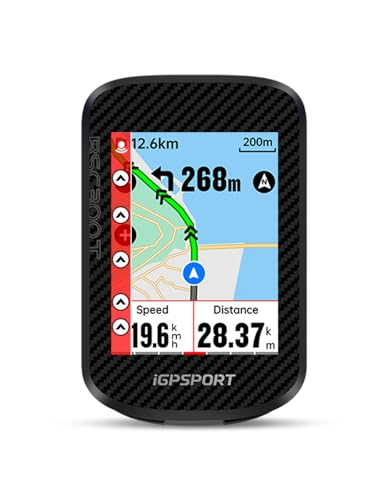
iGPSPORT BSC300T Wireless GPS Bike Computer

iGPSPORT BSC100S GPS Bike Computer 2.6″

Garmin Edge 540 Cycling Computer Bundle

iGPSPORT Smart Bike Headlight 500 Lumens

iGPSPORT BSC200S GPS Bike Computer 2.4″

iGPSPORT BSC500 GPS Bike Computer 3.3″
The Details Behind The Selections
Most touchscreen cycling computers force a trade-off between screen real estate and cockpit clutter, but the iGPSPORT BiNavi Bike Computer 3.5″ Touchscreen lands in the comfortable middle. The 3.5-inch panel makes turn prompts and map detail readable at a glance, while the unit still sits cleanly on most stems and out-front mounts.
For route-led riders, the standout is the iGPSPORT navigation ecosystem. Routes pushed from the companion app, plus files imported from Strava and Komoot, show up on the device and reroute automatically when I wander off course. Music control and climb tips round out the package, so this head unit covers touring, training, and weekend exploring in one box.
What Makes Sense
- 3.5″ touchscreen gives maps and data fields enough room to breathe without dominating the cockpit.
- Auto rerouting when I miss a turn keeps long-distance routes honest.
- Imports from popular third-party apps means I keep using the route tools I already trust.
- Climb tips add useful gradient awareness on rolling terrain.
- Music control keeps the phone tucked away on long rides.
Trade-Offs To Consider
- The larger screen pulls more battery than the compact BiNavi Air in item 4, so I plan charging around multi-day trips.
- Touch-only operation can be finicky in heavy rain or with full-finger gloves; owners commonly add a protective film.
Who Should Grab It
Touring cyclists and route-led road riders who want a screen big enough to follow a map without zooming in at every junction.
Look Elsewhere When
Riders building a stripped-down cockpit should weigh the iGPSPORT BSC200S, which keeps route navigation in a more compact, lower-cost body.
Riding on shared roads means trusting that drivers see me. The iGPSPORT SR mini Radar Bike Tail Light adds a layer of awareness by detecting vehicles approaching from behind, then alerting me through a paired head unit. The millimeter-wave radar reaches roughly 160 meters with a wide detection angle, which on rolling terrain means I get a heads-up before a fast car closes the gap.
Beyond the radar, the unit pulls double duty as a bright tail light with automatic brake flash. When I slow down, the sensor triggers a brighter pulse, and the 20-hour battery life covers long training blocks without nightly charging.
Positive Points
- 160-meter rear detection range covers most rural and suburban traffic scenarios.
- Automatic brake flash gives drivers an extra cue at the exact moment they need one.
- 20-hour battery life suits audax and long training rides.
Honest Caveats
- Real-time alerts require a paired cycling computer, so this light works best alongside another pick on this list.
- Radar detection accuracy can dip in heavy rain or when cars stack closely together in traffic.
Feature Snapshot
The Right Fit
Road riders who log miles on narrow, fast-moving lanes and want a rear-warning system that doesn’t demand a wrist-mounted display.
Swap It Out When
Off-road riders on fire roads and trails won’t get much from the radar and may prefer the iGPSPORT Smart Bike Headlight for forward visibility instead.
Heart-rate data only helps when the strap stays put and the readings stay accurate. The iGPSPORT HR50 Cycling Sensor Chest Strap uses an adjustable elastic band that fits a wide range of torso sizes, which matters because a loose chest strap is the fastest way to garbage data.
Dual Bluetooth and ANT+ transmission means I can broadcast to a head unit, a smart trainer, and a watch simultaneously, so the strap slips easily into a training setup that already exists. With IPX7 waterproofing and a battery that lasts up to 1200 hours, this is a set-and-forget piece of kit for most riders.
Practical Pluses
- Up to 1200 hours of battery life means I’m not swapping coin cells every few weeks.
- Dual Bluetooth and ANT+ support pairs with head units, watches, and indoor trainers at the same time.
- IPX7 waterproof rating handles heavy rain and post-ride rinses.
- Adjustable elastic band fits a wide torso range for a stable, accurate signal.
Worth Noting
- Chest straps can chafe on long base-mileage rides in hot weather, so a bit of chamois cream or a base layer helps.
- Sensor pods need periodic cleaning to keep the contact electrodes reading consistently.
Best Suited To
Training-focused riders who want reliable HR data for structured workouts, indoor trainer sessions, and longer endurance rides.
Consider Something Else When
Riders who hate chest straps should look at the iGPSPORT BSC300T or BiNavi models, which support wrist-based optical HR with less skin contact.
Smaller bars and tighter cockpits don’t leave room for a chunky head unit. The iGPSPORT BiNavi Air Bike Computer 3.0″ trims the screen down to 3.0 inches while keeping the same navigation smarts as the larger BiNavi in pick 1. Maps and ride data share the display, automatic brightness adjusts for sun or night, and a hybrid touch-and-button layout means I can still navigate with gloves on a wet climb.
Voice navigation adds audible turn prompts through a paired earpiece or speaker, which is genuinely useful when I don’t want to glance down at every junction. Smart rerouting kicks in if I miss a turn or stop to take a photo.
What It Does Well
- Compact 3.0″ form factor suits smaller bikes and minimalist setups.
- Voice navigation means fewer glances at the screen in busy traffic.
- Touch plus physical buttons give me a backup in rain or with full-finger gloves.
- Smart rerouting recovers gracefully when I miss a turn.
Things To Weigh
- Voice prompts require a paired audio device, which adds a small piece of gear to manage.
- The smaller screen shows less map detail at once compared to the 3.5″ BiNavi.
Made For
Gravel and road riders with smaller frames or minimal handlebar space who still want full navigation and climb data.
Not Your Match When
Riders who prioritize the largest possible screen for map-heavy touring should consider the iGPSPORT BiNavi Bike Computer 3.5″ Touchscreen in pick 1.
E-bike riders need different information than analog cyclists: assist level, battery state, and range remaining all matter. The iGPSPORT BSC300T Wireless GPS Bike Computer displays e-bike data alongside standard ride metrics, which means the head unit actually understands the motor it’s mounted to.
Offline map navigation is the quiet win here. On backcountry rides where cell coverage drops out, the BSC300T keeps route guidance going. Combined with Insta 360 camera compatibility, this unit fits nicely into a content creator’s setup, where route files sync to cameras and overlays.
Advantages To Know
- E-bike data fields like assist level show up natively on screen.
- Offline maps keep navigation alive in remote areas without cell signal.
- Multi-satellite positioning improves accuracy near tall trees and cliffs.
- Touchscreen plus six physical buttons balance gloved use and quick taps.
Practical Considerations
- Offline maps take up storage, so I plan a periodic cleanup of unused regions.
- The 2.4-inch touchscreen is smaller than the BiNavi models, which matters on map-heavy rides.
Whose Shelf It Belongs On
E-bike commuters and touring riders who regularly venture outside cell coverage and need navigation that still works in the middle of nowhere.
A Better Fit Elsewhere
Riders focused on road racing and structured training get more from the iGPSPORT BSC500 in pick 10 with its climb training function.
Not every rider needs a touchscreen or voice prompts. The iGPSPORT BSC100S GPS Bike Computer 2.6″ is a button-driven unit with a non-touch LCD, which is exactly what commuters and weekend riders often prefer: predictable, glove-friendly operation, and a battery that goes for days.
The 40-hour battery life is the headline figure. For commuters who charge once a week, or distance riders on multi-day tours, that kind of endurance removes a category of stress. Multi-satellite positioning (GPS, Beidou, GLONASS, Galileo, QZSS) keeps the speed and distance data trustworthy even under tree cover.
Strong Points
- 40-hour battery life is generous for the price bracket.
- Button-driven interface works perfectly with winter gloves.
- Bluetooth and ANT+ support pairs with HR straps and power meters.
- Over 40 ride data fields cover speed, distance, cadence, and more.
Softer Spots
- The 2.6-inch LCD is non-touch, so map-heavy navigation is harder to follow than on the BiNavi models.
- Data analysis depends on pairing with the iGPSPORT app, which adds a setup step.
Key Product Details
Perfect Match For
Budget-conscious commuters and new cyclists who want reliable GPS data without paying for navigation features they won’t use.
Reach For A Different Pick When
Riders planning to follow mapped routes frequently will get more from the iGPSPORT BSC200S, which adds basic route navigation at a similar size.
For riders who track every watt and chase personal records, the Garmin Edge 540 Cycling Computer Bundle sits at the top of the food chain. The compact body houses multi-band GNSS (which uses two satellite frequencies for better accuracy in tough environments), adaptive coaching, and up to 60 hours of battery life in saver mode.
This bundle version pairs the head unit with a 6-foot braided Type-C cable, a charger, a 16-in-1 bike repair tool kit, and a master guide, so a new owner can mount, charge, and fix basic roadside issues on day one. For endurance athletes and gravel racers who log serious mileage, the Edge 540 pays back the upgrade with deeper training metrics.
Positive Takeaways
- Multi-band GNSS improves accuracy under tree cover and in canyons.
- Adaptive coaching turns weekly rides into structured training blocks.
- Up to 60 hours of battery life in saver mode covers ultra-distance events.
- Bundled cable, charger, and repair kit mean everything works out of the box.
Points To Note
- The learning curve is steeper than the iGPSPORT line, so first-time users need patience with menus.
- Garmin’s ecosystem is best used with Garmin Connect, which means another app in the rotation.
Feature Card
Who Will Love This
Competitive road and gravel racers who want adaptive training guidance and serious data depth from a proven brand.
A Better Fit Elsewhere
Casual commuters just starting with GPS tracking will find better everyday value in the iGPSPORT BSC100S without the coaching complexity.
Data only helps if I can see where I’m going. The iGPSPORT Smart Bike Headlight 500 Lumens combines a TIR lens (which spreads light evenly without harsh hot spots) with a wide 220-degree beam pattern, casting useful illumination across both the road ahead and the edges of the path. At 500 lumens, it’s the entry point in a range that climbs up to 1800 lumens for off-road darkness.
Smart functions are the real differentiator. The headlight wakes up when I start pedaling and drops into sleep mode at standstill, conserving battery for the ride home. A light sensor flips the lamp off in bright tunnels and daylight, then back on when shadows close in.
Points In Its Favor
- Wide 220-degree beam pattern lights the road edges, not just the center line.
- Auto on/off behavior keeps the battery fresh without manual switching.
- Light sensor adapts to tunnels, shade, and changing daylight.
- Rechargeable battery avoids the cost and waste of replaceable cells.
Small Caveats
- At 500 lumens, the headlight suits urban and suburban routes but feels underpowered for unlit off-road trails.
- Smart features rely on a motion sensor, so leaving the bike parked for long stretches without locking the light off can drain the battery.
The Right Fit
Daily commuters and road riders who start before sunrise or finish after dusk on lit or semi-lit streets.
Consider Something Else When
Mountain bikers tackling unlit singletrack should consider higher-lumen options in the same iGPSPORT line for adequate throw on technical terrain.
The first bike computer I ever used had a single screen, a single function, and no map at all. The iGPSPORT BSC200S GPS Bike Computer 2.4″ sits at the entry level of modern route navigation, and it does the job without overwhelming newer riders.
Routes built in the iGPSPORT app or imported from Strava, Komoot, and Ride with GPS sync to the device, and saved points can be sent to the head unit with one tap for “ride to here” navigation. The 2.4-inch screen is small but readable, and IPX7 waterproofing handles the rain that always seems to show up on the day I forget my jacket.
Useful Highlights
- Route navigation from multiple third-party apps means I keep using familiar planning tools.
- One-touch saved-point navigation is genuinely useful for commute shortcuts.
- Bluetooth and ANT+ support pair with HR straps and power meters for training.
- IPX7 waterproofing holds up to heavy rain and post-ride washing.
A Few Limitations
- The 2.4-inch screen leaves less room for map detail than the BiNavi line.
- Setup takes longer than the simpler BSC100S, especially for first-time users pairing sensors.
Who Should Grab It
Weekend explorers new to GPS cycling computers who want real route navigation without stepping up to a touchscreen.
Skip It When
Riders committed to touchscreen mapping and climb training should consider the iGPSPORT BSC500 in pick 10.
Hilly routes are where a basic cycling computer starts to feel limiting. The iGPSPORT BSC500 GPS Bike Computer 3.3″ leans into climbing with a dedicated training function that breaks ascents into manageable segments, plus voice navigation so I don’t have to look at the screen to know what’s coming.
The 3.3-inch touchscreen shows up to 12 cycling data fields per page, which is more than enough for power, HR, gradient, and distance at a glance. Dual-band satellite reception (using both L1 and L5 frequencies for stronger positioning) improves accuracy near cliffs and in dense urban canyons, where single-band units tend to drift.
A Few Highlights
- 3.3-inch touchscreen balances size and readability.
- Climb training function segments ascents for pacing and effort.
- Voice navigation keeps eyes on the road.
- Dual-band GNSS improves accuracy in tough environments.
- E-bike mode displays assist level and battery data.
Trade-Offs To Consider
- Voice prompts require a paired audio device, adding a small piece of gear.
- Dual-band GNSS pulls more battery than the simpler BSC100S, especially on long rides with voice prompts active.
Feature Rundown
Built With In Mind
Hilly-route specialists and climbers who want structured pacing and accurate elevation data on long ascents.
Where A Sibling Pick Shines
Flat-route commuters focused on simple data tracking will find better daily value in the iGPSPORT BSC100S in pick 6.
What Matters Most Before Choosing Cycling Gps
Navigation Style and Screen Size
The biggest decision is how much mapping I actually need. A touchscreen computer with on-device maps, like the iGPSPORT BiNavi 3.5″, shines on unfamiliar touring routes, while a button-driven unit like the BSC100S works fine on familiar commutes. Screen size is the trade-off: bigger panels read easier but eat battery and cockpit space.
Connectivity and Sensor Pairing
Bluetooth and ANT+ are the wireless protocols that let a cycling computer talk to heart-rate straps, power meters, and e-bike motors. Look for both protocols if I already own sensors. The HR50 chest strap in this list uses both, which keeps options open.
Battery and Charging Habits
Battery life changes how I plan around the device. The BSC100S at 40 hours suits commuters who charge weekly, while touchscreens with maps drain faster. For multi-day trips, I either pick an endurance-focused unit or carry a small power bank.
Safety Extras Worth Considering
Radar tail lights and auto headlight features are no longer niche. The SR mini Radar tail light adds real awareness on shared roads, and the Smart Bike Headlight keeps my hands free of switches. For night riders, these aren’t luxuries, they’re basic safety.
Key Considerations Across These Picks
Common Shopping Slip Ups
Choosing by screen size alone is the most common trap. A 3.5-inch touchscreen looks great on paper, but if my typical ride is a 30-minute commute on known streets, button-driven navigation on a 2.6-inch unit is honestly enough. Matching features to the actual route is the trick.
Another miss is ignoring ecosystem lock-in. Some apps sync better with specific brands, and switching later means rebuilding routes and history. Picking a unit whose app plays nicely with the tools I already use saves friction down the line.
What The Higher Tier Buys
Premium models like the Garmin Edge 540 buy multi-band GNSS for tougher environments, adaptive coaching for structured training, and longer battery life for ultra events. For most riders, the value question is whether those extras match my training reality.
The honest read is that mid-tier units handle the daily ride well. The premium tier earns its place when I’m logging structured training blocks or riding into genuinely remote terrain where accuracy matters.
Frequently Asked Questions
Do I need a touchscreen cycling computer?
Touchscreens make map navigation and data field changes faster, but button-driven units are more reliable in heavy rain and with winter gloves. Pick based on your typical riding conditions.
How important is multi-band GNSS?
Multi-band GNSS improves accuracy near tall buildings, cliffs, and dense tree cover. For open-road riding, single-band is usually enough.
Can I use these computers in the rain?
All units in this list carry at least IPX7 waterproofing, which handles heavy rain and brief submersion. Still, drying the contacts after wet rides helps long-term reliability.
Do I need a chest strap for heart rate?
Chest straps deliver more accurate data, especially for interval training. Wrist-based optical sensors are convenient but tend to lag during sudden effort changes.
What is ANT+ and why does it matter?
ANT+ is a wireless protocol that pairs cycling computers with power meters, HR straps, and e-bike motors. Dual Bluetooth and ANT+ support means broader compatibility with existing sensors.
Wrap Up
The right cycling computer matches how, where, and how far I ride. Big-screen navigators like the BiNavi 3.5″ reward route-led touring, button-driven units like the BSC100S serve daily commutes, and accessories like the SR mini Radar and Smart Bike Headlight round out a safer setup. Pick the one that fits your real ride, and the data takes care of itself.