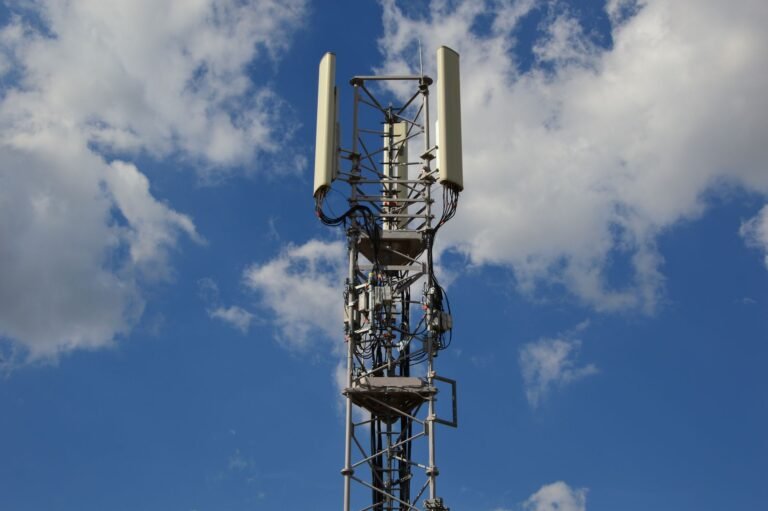

When the power goes out, the cell towers fall silent, or a storm cuts you off from the rest of the world, a reliable communication device becomes something most people never think about until they actually need one. I’ve put this list together for households prepping for severe weather, families who camp or travel off-grid, small teams working across job sites, and caregivers who rely on assistive technology day to day. The picks below cover weather radios, two-way radios, and an AAC speech device, so there’s something here whether your main concern is a blackout, a backcountry trail, or a loved one who needs a clearer way to speak.
The Main Contenders

Roxicosly Emergency Weather Radio with Hand Crank

Mesqool Solar Radio Emergency Hand Crank 12000mAh
Retevis RT22 Compact Walkie Talkies (4 Pack)

Retevis RT22 Commercial Walkie Talkies (6 Pack)

Retevis RT22 Compact Walkie Talkies (10 Pack)

FosPower NOAA Emergency Weather Radio A1 (Orange)

RunningSnail Emergency Radio with Flashlight and Reading Lamp
Baofeng UV-5R Mini Ham Radio Handheld

MibbyTalk AAC Device for Autism & Nonverbal Kids and Adults
Why These Options Stand Out
I like how this radio doesn’t lean on a single charging method, because real outages rarely offer ideal conditions. The 8500mm² monocrystalline solar panel pulls in more light than the smaller panels on most weather radios, which matters on cloudy days when you need to top off the battery slowly. For someone in a storm-prone region, that solar coverage translates into a device that doesn’t need a wall outlet to stay useful over a long emergency.
Compared with the Mesqool pick later in this list, this one focuses more on charging versatility than raw battery size, so the trade-off is real: lighter on the power bank side, heavier on the day-to-day resilience. It works well tucked into a hallway closet or a bug-out bag, and the NOAA weather band coverage means storm alerts come through even when local broadcast infrastructure wobbles.
The Helpful Details
- Oversized monocrystalline solar panel harvests light faster than smaller panels on competing radios.
- Hand crank delivers usable charge quickly for short calls or radio time.
- NOAA weather band reception keeps storm alerts available without cell service.
- Compact body fits a kitchen drawer or go-bag without taking up space.
Things To Consider
- Battery capacity is smaller than the Mesqool model, so it won’t top off a tablet multiple times.
- Owners commonly report that the radio speaker sounds best in small, quiet rooms rather than outdoors.
Feature Snapshot
Who Should Grab It
Households in hurricane or tornado country who want a radio that recharges itself between storms without needing perfect sunlight.
Skip It When
You need a much larger power bank for charging phones and tablets. In that case the Mesqool Solar Radio Emergency Hand Crank 12000mAh is the better fit.
Where the Roxicosly radio focuses on panel size, the Mesqool model focuses on stored power, and that 12000mAh battery makes a real difference during a multi-day blackout. I’ve looked at the noise-reduction circuitry and extended antenna spec, which combine to keep NOAA alerts stable even when reception conditions drop. For someone who treats a weather radio like a small power station first and a radio second, the math favors this unit.
The honest read is that this is a chunkier device, so it isn’t the kind of thing you’ll forget in a backpack. It shines in a fixed location like a pantry shelf or an RV galley, where the larger footprint is irrelevant and the extra capacity actually gets used. Compared with the FosPower pick below, this one gives up some rugged simplicity for higher capacity and clearer signal work.
A Favorable Mix
- 12000mAh battery handles multiple phone top-ups during extended outages.
- High-sensitivity signal chip with noise-reduction circuitry pulls in clearer NOAA broadcasts.
- Extended antenna improves reception in fringe areas or sheltered rooms.
- Three-way charging covers situations where one method simply won’t work.
Honest Caveats
- Larger footprint than smaller weather radios, so it’s less backpack-friendly.
- Cranking for a full recharge takes real effort, so most owners reserve it for short bursts.
Right Fit For
Families preparing for multi-day outages who want one device to run both alerts and phone top-ups.
Look Elsewhere When
You want a small radio for a bug-out bag. The Roxicosly Emergency Weather Radio with Hand Crank is the more portable sibling.
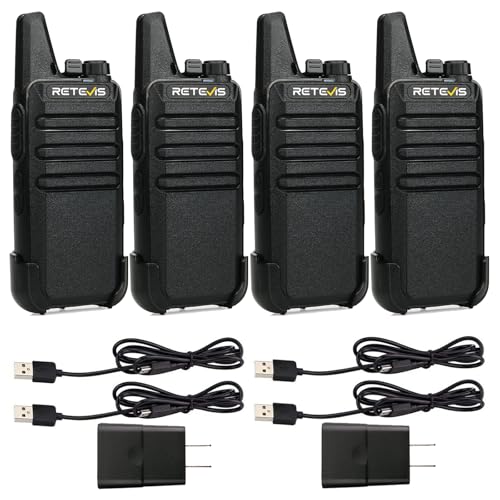
The first time I saw the RT22, the thumb-length antenna was the detail that stood out, because traditional walkie-talkie antennas have a habit of poking into ribs or snagging on backpack straps. This compact FRS (Family Radio Service) radio sidesteps that problem while still working on license-free channels right out of the box. For a family on a theme park day or a group spread across a campground, four units covers everyone without the bulk of older radios.
These walkie-talkies shift the conversation from broadcast alerts to direct communication, so they pair nicely with a weather radio like the FosPower below. The USB-C charging port keeps things modern, and roughly 10 hours of runtime per charge is plenty for a long day out. Compared with the larger RT22 packs later in this list, this one fits a smaller household or a quick weekend trip.
Useful Touches
- Compact, slim body slips into a pocket or clips onto a belt without a long antenna snag.
- FRS license-free operation means no paperwork and no FCC exam.
- USB-C charging uses the same cable as most modern phones.
- About 10 hours of use per charge covers a full day outdoors.
Points To Note
- Range drops fast in dense urban or forested areas, so expectations matter.
- Built for casual use, so heavy job-site abuse may shorten the lifespan.
Best Suited To
Families and friend groups who want hands-free coordination during outdoor days, theme parks, or neighborhood events.
Where Another Pick Suits Better
Crew leads running six or more radios on a job site will prefer the Retevis RT22 Commercial Walkie Talkies (6 Pack) with its gang charger.
Small crews run into a familiar pain point with radios: by the end of a shift, half the units are dead and the other half are scattered. This 6-pack solves that with a six-way multi-gang charger that drops every radio into a single dock at the end of the day. Overcharge, over-voltage, and short-circuit protections are built in, so leaving them plugged in overnight isn’t a worry.
The RT22 keeps its slim, license-free FRS design from the 4-pack earlier, so portability isn’t sacrificed for capacity. Sixteen channels give enough separation for different talk groups on a busy site, and the whole bundle works right out of the box. Compared with the 10-pack, this is the sweet spot for medium crews that don’t need ten units cluttering the office.
What Earns Its Place
- Six-way gang charger keeps all units topped up in one dock overnight.
- Built-in charging protections guard against overcharge and short circuits.
- Slim profile matches the rest of the RT22 family for consistent handling.
- License-free FRS operation across 16 channels.
Worth Bearing In Mind
- Larger bundle takes up more storage space when not in active rotation.
- Range follows FRS limits, so dense buildings still cut distance significantly.
Made For
Small business crews, church teams, or event coordinators who run a tight group of six and want one dock for the whole set.
Not Your Match When
You only need radios for a couple of people on a weekend trip. The Retevis RT22 Compact Walkie Talkies (4 Pack) is the lighter option.
Ten radios sounds like overkill until you manage a busy venue, run a multi-table restaurant, or coordinate volunteers across a large property. The updated 10-way gang charger in this bundle adds an LED indicator strip and a progress bar, so it’s obvious at a glance which units are topped off and which still need time. The removable charging slot design helps when individual radios need to be redeployed before the rest finish charging.
This pack extends the same slim RT22 form factor across a much larger team, so handling stays familiar even as the operation scales. The trade-off shows up in storage, because ten units need a real shelf. Compared with the 6-pack, the value per radio climbs noticeably, so anyone already running close to ten should jump straight to this bundle.
What Helps Most
- 10-way gang charger with LED progress bar for clear status at a glance.
- Removable charging slots let one radio redeploy early without disturbing the others.
- Compact RT22 form factor keeps pocket carry comfortable for every team member.
Trade Offs To Consider
- Bigger charging dock needs a dedicated outlet and shelf space.
- Clip removal required before charging, which adds a small step to the daily routine.
Perfect Match For
Larger crews, school campuses, or hospitality teams that need ten radios charging in one organized dock.
A Better Fit Elsewhere
Smaller groups paying for capacity they won’t use. The Retevis RT22 Commercial Walkie Talkies (6 Pack) covers most non-industrial teams.
The FosPower A1 has been around long enough that it’s become a default choice for entry-level emergency kits, and the reason is straightforward: three charging sources, a power bank, and NOAA coverage in a package that’s easy to hand to someone who’s never set up an emergency radio before. The 7400mWh battery sits between the smaller Roxicosly and the larger Mesqool unit, so it handles a phone top-up without dominating the shelf.
I appreciate that this model doesn’t try to do everything, which keeps the controls simple for a household that just wants alerts and light charging. The bright orange case makes it easy to spot in a dark closet or a packed car trunk. Compared with the RunningSnail model below, this one gives up the reading lamp but keeps the radio basics at a friendlier entry cost.
Positive Takeaways
- Three charging sources (solar, crank, USB) cover most emergency scenarios.
- Power bank feature tops off a phone when the grid is down.
- Bright orange casing helps locate the radio quickly in low light.
Room For Improvement
- Battery capacity trails larger weather radios for multi-day charging needs.
- Solar panel is smaller than premium models, so cloudy days mean slower top-ups.
Whose Shelf It Belongs On
Beginners building a first emergency kit who want a simple, three-source radio without extra frills.
Swap It Out When
You want a built-in reading lamp and a larger battery. The RunningSnail Emergency Radio with Flashlight and Reading Lamp is the upgrade path.
The standout upgrade on the RunningSnail model is the reading lamp, which sounds minor until you’ve tried to read a paper map or check a circuit breaker in a darkened house. Combined with the flashlight and the 14800mWh battery, this radio quietly doubles as a small lighting station during a multi-hour outage. The sensitive touch switch and external antenna round out the package in ways older emergency radios tend to skip.
For households that treat an outage as a “stay put” event rather than an evacuation, the lamp and the larger battery both earn their keep. Compared with the FosPower A1, this one costs a little more in exchange for noticeably more capacity and an extra light source. It also plays nicely as a backup for two-way radio users, since the RT22 packs above don’t include lighting.
A Strong Showing
- Built-in reading lamp adds practical lighting during long outages.
- 14800mWh battery handles multiple phone top-ups.
- External antenna improves NOAA reception in sheltered rooms.
- Sensitive touch switch feels modern compared to older button-only radios.
Minor Gripes
- More features mean a slightly steeper learning curve for first-time users.
- Owners commonly note the touch switch takes a moment to learn.
Who It Suits Best
Homeowners who want a single device that handles alerts, lighting, and phone charging during extended blackouts.
Reach For A Different Pick When
You only need basic weather radio coverage. The FosPower NOAA Emergency Weather Radio A1 keeps things simpler and lighter.
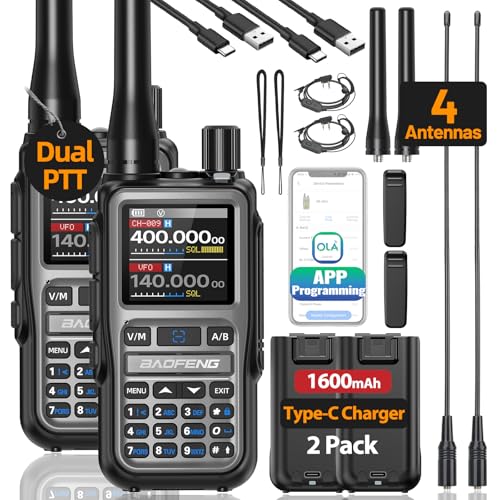
This is the pick for someone who has moved past consumer-grade radios and wants real two-way capability. With up to 999 channels, dual PTT (push-to-talk), VOX (voice-activated transmission), and frequency copy, the UV-5R Mini behaves more like a tool than a toy. Ham radio operation (amateur radio) requires a license in most regions, so this isn’t a grab-and-go item for the whole family, but for a licensed hobbyist it’s a small, capable handheld.
The signal is designed to push through wood, steel, and concrete better than typical walkie-talkies, which matters in dense neighborhoods or apartment buildings. USB-C charging keeps it compatible with the same cables you already carry. Compared with the Retevis RT22 line, this trades the license-free simplicity for genuine long-range, programmable capability that preparedness-minded hobbyists usually want.
What Works In Its Favor
- 999 channels with dual PTT and VOX for flexible operation.
- Signal penetrates common building materials better than typical FRS radios.
- USB-C charging matches modern cables.
- Compatible with CHIRP programming software for advanced setups.
Points To Keep In Mind
- Ham operation requires an FCC license in the United States, so casual users should plan ahead.
- Steeper learning curve than license-free walkie-talkies for first-time users.
Key Attributes
Built With In Mind
Licensed amateur radio operators and serious preppers who want a compact handheld that outperforms consumer FRS radios.
Consider Something Else When
You want license-free convenience for casual family use. The Retevis RT22 Compact Walkie Talkies (4 Pack) is the simpler route.
Communication emergencies aren’t always about storms. For nonverbal children and adults, an AAC (Augmentative and Alternative Communication) device is the difference between being understood and being ignored. The MibbyTalk is positioned as an affordable starter device, which matters because high-end AAC systems often come with long waitlists and steep price tags that families can’t absorb.
It fits families transitioning from PECS (the Picture Exchange Communication System, a low-tech method using picture cards) or waiting on insurance-funded systems, and it works for users whose needs stem from autism, stroke, or dementia. Compared with the radios on this list, it solves a completely different problem, but it belongs in any honest roundup of emergency communication tools, because losing a primary voice during a crisis is its own kind of emergency.
Reasons It Performs
- Affordable entry point for families starting their AAC journey.
- Useful for autism, stroke, and dementia-related communication needs.
- Serves as a bridge device while waiting for high-tech systems.
Things To Weigh
- Starter hardware means advanced customization may require a higher-tier device later.
- Parents commonly report an adjustment period while the user builds familiarity with the system.
The Right Fit
Families and caregivers looking for a budget-friendly AAC starter that supports nonverbal users across age groups.
Another Choice May Suit
Households whose main concern is broadcast alerts and two-way radio coverage. The Roxicosly Emergency Weather Radio with Hand Crank covers that need.
Picking The Right Emergency Communication Tool For Your Situation
Weather radios, walkie-talkies, ham handhelds, and AAC devices solve different problems, so the right pick depends on the kind of emergency you actually anticipate. A household in tornado alley benefits most from a NOAA weather radio with multiple charging sources, like the Roxicosly or Mesqool models above, because alerts and power continuity matter more than conversation. A family that camps or attends crowded events needs license-free two-way communication, which is where the Retevis RT22 packs fit naturally, and the gang-charger bundles make the most sense for crews who rotate radios daily.
For licensed amateur radio operators, the Baofeng UV-5R Mini unlocks real long-range capability that FRS radios can’t touch, with the trade-off being a learning curve and a license requirement. And for caregivers of nonverbal family members, the MibbyTalk AAC device handles a category of emergency that’s easy to overlook until it becomes urgent. Match the device to the failure mode you fear most, and the rest of the decision tends to fall into place.
Key Considerations Across These Picks
Pitfalls Shoppers Hit
A common mistake is treating a weather radio like a battery bank first and a radio second, then discovering the speaker is too quiet to hear over a storm. Another trap is buying license-free FRS radios expecting long-range performance, only to find that walls and hills cut distance fast. Buyers also underestimate how much storage a 10-pack charging dock needs, or how steep the learning curve on a ham radio can be without a license already in hand.
Where The Extra Money Goes
Higher-tier weather radios spend the budget on bigger solar panels, larger batteries, and clearer signal processing, which matters most during multi-day outages where sunlight and reception both get worse. Premium walkie-talkie bundles add gang chargers and protection circuits that pay off in daily wear and tear. Ham handhelds charge for frequency flexibility and signal penetration, which translates directly to range and reliability when infrastructure is gone.
Frequently Asked Questions
Do emergency weather radios still work when cell towers go down?
Yes, because NOAA weather alerts broadcast over radio waves from dedicated transmitters, which means a charged weather radio with NOAA coverage keeps working even when cellular networks fail.
How far can license-free FRS walkie-talkies actually reach?
Expect a few hundred feet to a mile or two in open areas, with significant drops inside buildings or dense neighborhoods, so plan around realistic rather than advertised range.
Do I need a license to use the Baofeng UV-5R Mini on ham frequencies?
Yes, transmitting on amateur radio frequencies in the United States requires an FCC amateur license, so users should earn a license before operating on those bands.
How long do hand-crank radios take to charge a phone?
A minute of cranking typically delivers a short call or a brief radio session, not a full phone charge, so crank power is best treated as emergency reserve rather than a daily charging method.
Can AAC devices help during medical emergencies?
For nonverbal users, an AAC device can be critical for communicating pain, needs, and identity to first responders, which makes it a meaningful part of any emergency communication plan.
The Takeaway
The best communication device is the one matched to the kind of silence you fear most, whether that’s a storm, a power outage, a crowded event, or a moment when words won’t come. I hope this roundup makes it a little easier to pick the right tool, stock a kit, and move on with confidence that the basics are covered.