
I’ve been writing about phone photography long enough to know the real frustration: built-in phone cameras hit a ceiling fast. Telephoto shots turn mushy, wide landscapes crop awkwardly, and that tiny insect you wanted to capture simply won’t focus. The right accessory changes all of that, and the picks below cover the most useful angles.
The Picks In Brief

APEXEL 10X Tele-Macro Dual Lens for iPhone

Rogue Fishing Co. The Protector Phone Tether

APEXEL 2X 50mm Portrait Master Telephoto Lens

APEXEL 36X Telephoto Lens with Tripod

APEXEL 36X Telephoto Lens Kit

NEEWER 17mm to 37mm Lens Filter Adapter Ring
Beysfilter 235° Fisheye Clip-On Lens Kit

APEXEL Professional Macro Photography Lens

APEXEL 200X Phone Microscope Lens
What Each Pick Brings To The Table
Most clip-on phone lenses force a choice: telephoto or macro, but rarely both. The APEXEL 10X Tele-Macro Dual Lens sidesteps that compromise by pairing a 10X telephoto optic with a 10X macro element in one mount. For someone shooting a concert one weekend and garden insects the next, that dual purpose means one accessory instead of two pouches of gear.
Where it shines is reach at distance. A 10X optical pull closes the gap between your seat and the stage without resorting to digital zoom, which kills detail. Switch to the macro side and the focus sweet spot sits around 8 inches, far enough away to keep your shadow off the subject. For curious shooters who want flexibility without buying a full lens kit, the math works.
Where It Helps
- Dual-function design replaces two separate lenses for travel-friendly packing.
- 10X telephoto reach pulls distant stage action and outdoor wildlife closer.
- 8-inch macro working distance keeps shadows from ruining close-ups of flowers and insects.
- Clip-on mount attaches quickly across recent iPhone generations without extra adapters.
- Cuts down on digital zoom reliance, preserving image quality at distance.
Things To Consider
- Combined weight on the clip can feel unbalanced during longer handheld sessions.
- Glass coatings collect fingerprints easily and need a microfiber cloth on hand.
Best Suited To
Concertgoers, casual wildlife watchers, and travelers who want telephoto reach and macro close-ups from one accessory.
Consider Something Else When
The Rogue Fishing Co. The Protector Phone Tether makes more sense for anyone shooting near water where drop protection matters more than focal length.
Phones and lenses don’t mix well with water, and replacing either hurts. The Rogue Fishing Co. The Protector Phone Tether solves a problem that no telephoto lens can: keeping your device physically attached to you when a slip is likely. On a dock, in a kayak, or leaning over a boat rail, the leash catches the phone before gravity wins.
It belongs on the list because no optics matter if your phone is at the bottom of a lake. Anglers, paddlers, and shoreline shooters who already carry quality lenses still need a tether for the moments when hands are wet, footing is slick, or waves are unpredictable. The accessory is simple, but the protection it offers pays for itself the first time a gust catches an unexpecting grip.
The Upside
- Prevents catastrophic drops when shooting around water or uneven terrain.
- Lightweight profile adds no bulk to a pocket or tackle bag.
- Works alongside any clip-on lens or rig without interfering with mounting.
Worth Noting
- Tether length can feel short for anglers who prefer the phone dangling away from body contact.
- Material wear around the attachment loop is common after a season of saltwater exposure.
- Not a replacement for a waterproof case in submersion scenarios.
Made For
Boaters, kayak photographers, and shoreline anglers who shoot in conditions where a dropped phone means a ruined day.
Look Elsewhere When
The APEXEL 10X Tele-Macro Dual Lens for iPhone suits shooters who want optical reach more than physical drop protection.
The 50mm focal length has ruled portrait photography for decades because it mirrors how the eye sees people. The APEXEL 2X 50mm Portrait Master delivers that natural perspective on a phone, sidestepping the wide-angle distortion that makes noses look bigger and faces stretched. For portraits, headshots, and food flat-lays, the result looks honest rather than fishbowl-curved.
Compared to the APEXEL 10X Tele-Macro Dual Lens covered earlier, this lens trades raw reach for subtle optical quality. Lanthanum glass construction preserves detail without the digital sharpening that often plagues phone telephoto software. Photographers who care about skin texture and fabric weave, the kind of detail that separates a casual snapshot from a usable portrait, will notice.
Real Benefits
- 50mm equivalent focal length flatters faces without wide-angle warping.
- Lanthanum glass optics preserve detail without artificial sharpening.
- True 2X optical magnification keeps full resolution at the long end.
- Useful for portraits, street photography, and food close-ups.
Room For Improvement
- Modest zoom factor limits use for distant wildlife or stage subjects.
- Lens mount alignment with the main camera takes a few attempts the first time.
Who It Suits Best
Portrait photographers, content creators, and food bloggers who want natural-looking compression without a bulky dedicated camera.
Not Your Match When
The APEXEL 36X Telephoto Lens with Tripod fits someone who needs serious distance reach for birdwatching rather than close-range portraiture.
When 10X or even 50mm equivalent isn’t enough, the APEXEL 36X Telephoto Lens with Tripod steps into long-reach territory. A 36X optical pull can resolve subjects over 1000 meters away, useful for birding, golf, and stadium seats where the action sits far from your position. The bundled tripod matters more than it might seem, since any handshake at 36X shows up as a blurred frame.
It differs from the APEXEL 2X 50mm Portrait Master in obvious ways: weight, reach, and required setup. This isn’t a grab-and-go lens for street portraits; it’s a deliberate kit for planned distance shots. For nature watchers scanning treetops or photographers documenting wildlife from a respectful distance, the setup pays off.
A Few Strong Suits
- 36X optical reach captures subjects beyond the range of typical phone zooms.
- Included tripod stabilizes long-lens shooting and reduces shake artifacts.
- Color fidelity stays solid even at extreme magnification on distant subjects.
- Works across iPhone and Android devices for flexible use.
- Suited to birding, sports, and travel photography from afar.
Points To Keep In Mind
- Setup takes longer than clip-on lenses and isn’t casual pocket carry.
- Manual alignment with the phone’s main sensor is required for sharp results.
- Glass elements at this magnification amplify any dust or smudge.
The Right Fit
Birders, wildlife watchers, and concert photographers who plan their shots and need serious reach.
Swap It Out When
The APEXEL 2X 50mm Portrait Master Telephoto Lens fits street portraiture where weight and reach matter less than natural perspective.
Where the previous APEXEL 36X option arrives with a tripod, this sibling kit skips the stand and leans into portability. The fixed 36X view with manual focus feels more deliberate: turn the ring, lock onto the subject, and shoot from 50 feet or further. Best results come between 100 and 500 feet, a useful range for hikers and travelers documenting distant landmarks.
Manual focus is the trade-off here. Autofocus phones can struggle at extreme magnification, so a focus ring often produces sharper results. A timer or burst mode compensates for handshake. Compared to the APEXEL 10X Tele-Macro Dual Lens, this lens gives up versatility for raw distance.
Why It Works Well
- Compact telephoto body travels easier than the tripod-equipped sibling.
- Manual focus ring delivers reliable sharpness where autofocus hunts.
- Solid mid-range performance between 100 and 500 feet for travel subjects.
- Cross-platform compatibility works with most modern smartphones.
Honest Caveats
- No tripod means steadier hands or a separate support are necessary at full zoom.
- Fixed 36X magnification isn’t suited to closer subjects under 50 feet.
- Manual focus requires practice to use confidently.
Whose Shelf It Belongs On
Travel photographers and hikers who need long-reach optics without hauling a tripod on every trail.
Reach For A Different Pick When
The APEXEL 36X Telephoto Lens with Tripod serves shooters who value stability over portability and don’t mind the extra setup time.
Adapter rings don’t grab headlines, but they solve real headaches. The NEEWER 17mm to 37mm Lens Filter Adapter Ring bridges the gap between phone cages with 17mm mounts and 37mm-threaded lenses, including popular Beastgrip optics. For someone who already owns a rig setup, this small ring opens the door to a wider lens ecosystem without buying new mounts.
It belongs on a cellphone cameras list because serious mobile video work increasingly leans on modular rigs. The ring works with cages for recent Pro Max, Plus, and Ultra phones, plus Pixel devices. Where the APEXEL telephoto lenses covered earlier are complete optics, this piece is infrastructure, the part that makes everything else play together.
What Works In Its Favor
- Compatibility across several NEEWER cages and 17mm lens backplates.
- Opens Beastgrip 37mm lens compatibility for rig users.
- Supports newer iPhone 16 and 15 Pro Max builds.
- Affordable upgrade compared to buying a new cage system.
Practical Considerations
- Useful only with a compatible cage; standalone shooters gain little.
- Metal threads can seize if cross-threaded during installation.
Who Should Grab It
Rig builders and videographers who already use NEEWER cages and want broader lens compatibility.
A Better Fit Elsewhere
The APEXEL 36X Telephoto Lens with Tripod suits solo shooters who want a complete optical setup rather than a build-your-own rig.
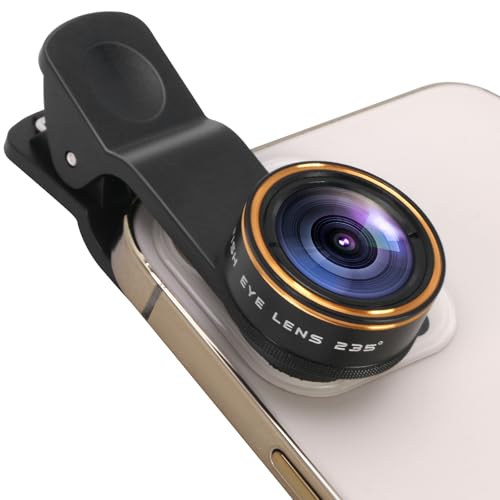
Fisheye lenses divide opinion: love them or leave them. The Beysfilter 235° Fisheye Clip-On Lens Kit leans hard into the dramatic side, compressing sky, ground, and foreground into one exaggerated barrel-shaped frame. For vloggers, travel reels, and creators chasing a stylized look, that distortion is the point.
Multi-layer optical glass construction avoids the soft edges common in cheap clip-ons. The rubber clip fits most recent iPhone models and mainstream Android devices without scratching the housing. Compared to the APEXEL 2X 50mm Portrait Master covered earlier, this lens offers zero subtlety, and that’s precisely the appeal for short-form video creators.
Key Advantages
- 235° field of view captures panoramic scenes in a single frame.
- Multi-layer coated glass keeps edges sharper than typical budget fisheyes.
- Soft rubber clip avoids scratching phone housings during repeated attachment.
- Works across recent iPhone 17, 16, 15, and Android phones.
- Strong visual style for vlog intros and creative B-roll.
Less Ideal Details
- Heavy barrel distortion rules out any realistic or documentary use.
- Not suited to portrait or product photography where accuracy matters.
Perfect Match For
Content creators, vloggers, and social media shooters chasing stylized visuals rather than naturalistic frames.
Skip It When
The APEXEL 2X 50mm Portrait Master Telephoto Lens suits portrait or street photographers who want natural proportions instead of dramatic curvature.
Macro photography on phones has improved, but dedicated optics still pull ahead. The APEXEL Professional Macro Photography Lens uses five glass elements with multi-layer coatings to capture close-ups without the distortion or dark corners that plague cheap plastic clip-ons. For jewelry inspection, plant details, and small-product photography, the difference shows up immediately in the corners of the frame.
It differs from the APEXEL 10X Tele-Macro Dual Lens covered earlier by focusing purely on macro rather than splitting attention between telephoto and close-up. That singular focus lets the optical design concentrate on working distance and edge sharpness. Gardeners, crafters, and curious naturalists get cleaner results from a dedicated tool.
Practical Advantages
- Five-element glass construction beats typical resin macro clip-ons.
- Multi-layer coatings reduce reflectivity and improve light transmission.
- Edge sharpness stays clean without vignetting in most lighting.
- Useful for jewelry, plants, electronics, and craft documentation.
Some Limits To Know
- Macro-only design means a second lens is needed for distance subjects.
- Working distance is very short, so shadows from the phone body can interfere.
Built With In Mind
Hobbyist photographers, crafters, and naturalists shooting close subjects where detail matters more than reach.
Where A Sibling Pick Shines
The APEXEL 10X Tele-Macro Dual Lens for iPhone suits someone who wants both telephoto and macro in one accessory rather than a dedicated macro lens.
Macro is one thing; microscope-magnification is another. The APEXEL 200X Phone Microscope Lens turns a smartphone into a jeweler’s loupe, capable of revealing textures and structures invisible to the naked eye. The optimal working distance is just 6mm, which sounds extreme until you realize what that means for inspecting gems, circuit boards, or skin and fabric weave.
Built-in LED lights and a CPL (circular polarizer) filter help manage the harsh reflections that ruin extreme close-ups. The four-layer glass stack holds up to the demands of high magnification. Compared to the APEXEL Professional Macro Photography Lens covered earlier, this lens goes far beyond casual close-ups into genuine scientific territory.
A Few Highlights
- 200X magnification reveals fine detail on jewelry, electronics, and specimens.
- Built-in LED illumination handles low-light close-up situations.
- CPL filter reduces glare on reflective subjects.
- Four-layer glass stack maintains clarity at extreme magnification.
- Useful for hobbyists, repair technicians, and curious learners.
Factors To Consider
- 6mm working distance is unforgiving and takes patience to master.
- Battery-powered LEDs require charging and add weight to the lens body.
- Specialty tool with limited use outside inspection or curiosity work.
Who Will Love This
Hobbyists, jewelers, electronics repair techs, and curious explorers who want microscope-grade detail from their phone.
Another Choice May Suit
The APEXEL Professional Macro Photography Lens fits gardeners and crafters who need general close-up work without extreme magnification.
What To Weigh Before Picking Phone Camera Accessories
Match The Lens To Your Real Subjects
Telephoto reach helps at concerts and sporting events, but it’s wasted on close-up crafts. Macro optics excel at flowers and jewelry but frustrate landscape shooters. The honest starting point is listing what you actually photograph most often, then matching the focal length and working distance to that scenario rather than chasing the biggest number on the box.
Versatility has appeal, but hybrid lenses like the APEXEL 10X Tele-Macro Dual Lens often compromise at one end. Dedicated optics tend to produce sharper results within their specialty. Beginners usually benefit from a single-purpose lens that nails one use case, while enthusiasts may want two or three optics covering different ranges.
Understand Mounting And Compatibility
Clip-on mounts suit casual shooters because they snap on quickly and travel well. Cage-and-thread systems, like the NEEWER 17mm to 37mm adapter ring, suit rig builders who already use stabilization hardware. Confirm thread sizes and clamp dimensions before buying, since mismatched mounts lead to vignetting or alignment headaches.
Phone cases add thickness that interferes with many clip designs. Owners of rugged cases often need to remove the case before mounting, while slim cases usually work fine. Checking fit details ahead of time saves the frustration of receiving a lens that won’t seat properly against the camera bump.
Factor In Stability And Support
Higher magnification amplifies every handshake. A tripod, monopod, or stable surface becomes essential above 10X, and even helpful below that for low-light scenes. The APEXEL 36X Telephoto Lens with Tripod bundles a stand for that reason; the kit version omits it for portability. Choosing between stability and convenience shapes how often you’ll actually use the lens.
Built-in image stabilization on the phone helps, but it can’t fully compensate for sway at extreme zoom. A simple phone tripod costs little and unlocks sharper long-lens shots without expensive gear.
Smart Moves Before You Commit
Common Shopping Slip Ups
Many shoppers grab the highest magnification number on the shelf and overlook working distance. A 200X microscope lens sounds impressive until you realize the subject must sit 6mm from the glass. Reading the practical specs, especially minimum focus distance and field of view, matters more than chasing headline magnification figures.
Another mistake is ignoring the phone model match. A lens optimized for older iPhones may not center properly over newer camera bumps. Confirming compatibility, sometimes by checking user photos rather than marketing claims, prevents the disappointment of a lens that crops half the frame.
Why Top Tier Costs More
Premium lenses invest in glass elements rather than resin, and multi-layer coatings instead of single coatings. That translates to sharper edges, less chromatic aberration, and fewer dark corners. For working professionals or dedicated hobbyists, the optical quality gap is worth the price difference.
Higher-tier options also tend to include better mounting hardware and accessories. Bundled tripods, support rings, and carrying cases raise the effective price, but they eliminate the need to buy supporting gear separately. The upgrade often pays for itself through a more complete kit rather than a better single optic.
Frequently Asked Questions
Do clip-on lenses really improve phone photos?
They add optical capabilities the phone can’t replicate, such as extreme telephoto reach or genuine fisheye distortion. For most everyday scenes, the built-in camera is sufficient. The accessories earn their place when subjects sit at the edges of what the phone alone can capture.
Will these lenses work with any phone?
Most clip-on designs fit a wide range of recent iPhones and Android devices, but exact compatibility varies. Checking the manufacturer’s compatibility list and considering case thickness prevents most mounting issues before they appear.
How do I keep clip-on lenses from scratching my phone?
Look for lenses with rubber-padded clips and clean the phone’s camera area before mounting. Storing lenses in soft pouches prevents grit from collecting on the rubber, which is the usual cause of micro-scratches over time.
Are telephoto lenses better than digital zoom?
Optical telephoto preserves full resolution at the long end, while digital zoom simply crops and enlarges the same image. For any serious distance work, optical reach produces noticeably sharper results, especially in lower light.
What maintenance do these lenses need?
A microfiber cloth and occasional lens-safe cleaning solution cover most needs. Avoiding touching the front element with fingers, and storing lenses in padded cases, extends their optical life considerably.
The Takeaway
Phone camera accessories work best when they solve a specific frustration rather than chase a spec sheet. Start with the subjects you shoot most, then match the lens to that real-world scenario. A thoughtful pick will outlive the phone it first attaches to.